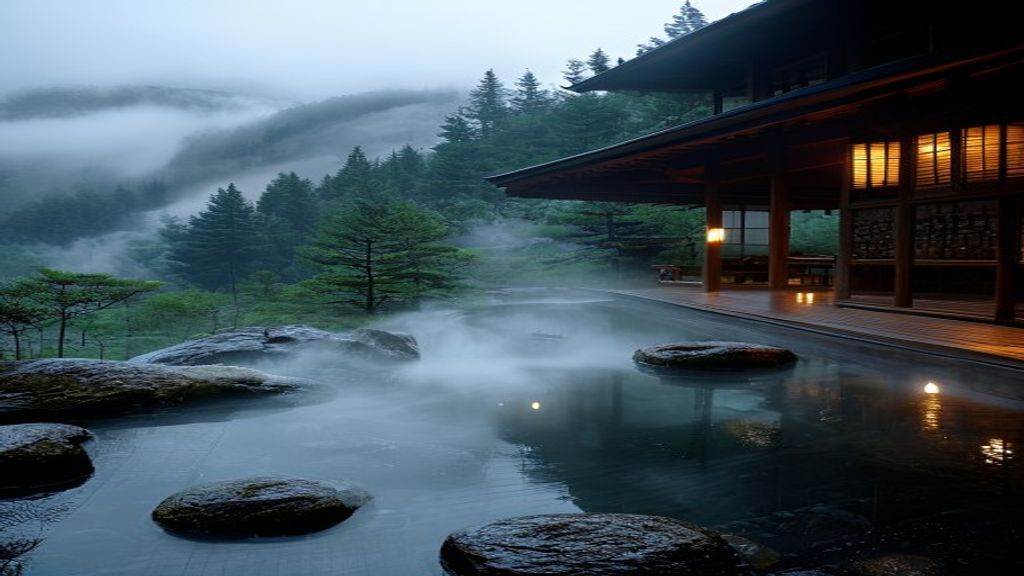
You’ve found a ryokan listing with a photo of a wooden tub overlooking a cedar forest. The price says ¥18,000 per person. The reviews say “magical.” You hover over the Book Now button, then stop, because you realize you have no idea what you’re actually booking. Is there a private bath, or will you be naked next to strangers before breakfast? Does “dinner included” mean a bowl of rice, or twelve courses you’ll be too intimidated to eat properly? Is this place even accessible by train?
This is the moment most first-timers either book the wrong thing and spend a week regretting it, or abandon the idea entirely and stay in another Shinjuku business hotel. Neither outcome is acceptable.
This guide is for people who have already decided they want the experience. Not the Instagram version, the actual one — waking up at six in the morning, shuffling to a stone bath in a cotton yukata (浴衣), and sitting in water so hot your thoughts evaporate. You just need to make the right call before you pay.
What “Onsen” Actually Means Before You Start Shopping
The word onsen (温泉) refers specifically to geothermally heated water that meets Japan’s legal mineral standards. Not all hot baths are onsen. Not all ryokan have onsen. This distinction matters when you’re reading listings.
Within the onsen category, you’re choosing between formats. A rotenburo (露天風呂) is an open-air bath, often the most beautiful option but also the most exposed. A kashikiri (貸切風呂) is a private reserved bath, booked by time slot, which solves the communal nudity problem entirely. Konyoku (混浴) is mixed-gender bathing — genuinely rare now, still exists in older resort areas like parts of Aomori and Tochigi, and is exactly what it sounds like.
Day-use higaeri (日帰り) plans let you use the baths and sometimes eat without staying overnight. If you’re not ready to commit to a full ryokan stay, Onsen day passes & private bath reservations (Klook experiences) are worth looking at first — lower financial stakes, same water.
How to Read a Ryokan Listing Without Getting Fooled
Japanese ryokan listings, even in English, contain phrases that function as shorthand for things guidebooks never explain.
“Natural hot spring water used” means actual onsen. “Hot spring bath” or “thermal bath” sometimes means heated tap water with minerals added. Look for the phrase gensen (源泉), which means water drawn directly from the source — this is the standard worth seeking.
“Shared facilities” means communal baths. “In-room bath” or “private open-air bath” means you get your own. “Kashikiri available” means private baths exist but may cost extra and require a reservation — confirm this before you arrive. “Dinner included” at a real ryokan almost always means kaiseki (懐石) — a multi-course seasonal meal served in your room or a private dining space. This is not optional in most cases. If you don’t eat fish, raw food, or have dietary restrictions, you need to communicate this at booking, not on arrival.
Location: What the Towns Actually Feel Like
Hakone is convenient from Tokyo, well-organized for foreign visitors, and priced accordingly. Expect ¥25,000–60,000 per person per night for mid-to-upper tier options. Kinosaki Onsen in Hyogo is more intimate — a small street lined with seven public baths, where guests wander between them in yukata after dinner. It’s the more atmospheric choice if you’re willing to take the longer train ride. Hakone & Kinosaki ryokan listings (Booking.com ryokan search) covers both well and lets you filter by bath type.
Beppu in Oita is volcanic, slightly chaotic, and excellent value. Kusatsu in Gunma has some of the most acidic water in Japan — effective for skin, less effective for jewelry. For smaller destinations where the train stops running at nine and the kombini is forty minutes away, check How to Get to Small Towns in Japan Without a Car (The Last-Mile Travel Guide) before you commit to a location.
For something genuinely off the tourist circuit, Yunomine Onsen in Wakayama — the oldest onsen in Japan — is worth the effort. Guided onsen town walks that include local context and cultural history can be booked through Guided onsen town tours and cultural experiences (Viator booked tours), which is useful if you’re staying somewhere less documented in English.
Rules, Red Flags, and the Tattoo Question
Tattoo policies remain the most common source of friction between foreign visitors and Japanese onsen. Many communal baths still prohibit tattooed guests in shared spaces. The policy is softening, slowly, particularly at smaller family-run ryokan catering to international visitors — but it’s not gone. If you have visible tattoos, email the property before booking. Don’t assume. If they offer kashikiri options, the private bath usually sidesteps the issue entirely.
Children are often restricted from certain baths or required to be accompanied. Meals at traditional ryokan are served at fixed times — usually 6–7 pm for dinner and 7–8 am for breakfast. Arriving thirty minutes late is not treated casually.
“The rules at an onsen ryokan are not arbitrary. They exist because the space is shared, the experience is sensory, and silence is part of the offering. Once you understand that, following them becomes less compliance and more participation.”
Price Tiers: What the Money Actually Buys
| Tier | Typical Price Per Person | What to Expect |
|---|---|---|
| Budget business ryokan | ¥6,000–10,000 | Small shared baths, basic breakfast, limited room service |
| Mid-range minshuku (民宿) | ¥10,000–20,000 | Family-run, home-cooked meals, genuine but modest facilities |
| Standard ryokan | ¥20,000–35,000 | Private or kashikiri baths, kaiseki dinner, room with tatami |
| Luxury kaiseki stay | ¥40,000–100,000+ | In-room rotenburo, multi-course dinner, private service |
The jump from mid-range to luxury is largely about exclusivity and meal quality. The water itself, if it’s genuine onsen, does not change.
Booking, Packing, and Your First Bath
Book direct when the property has an English booking page — you’ll often get better cancellation flexibility and can communicate dietary requests more clearly. Booking.com is useful for comparison and English reviews, but read the cancellation policy carefully; some ryokan charge 50% or more for late cancellations.
For packing, most ryokan provide yukata, tabi socks, a small towel, and basic toiletries. What they don’t always provide is a large bath towel, specialized skincare, or anything for accessibility needs. A microfiber towel is worth bringing. If you have tattoos and are trying private baths, silicone cover patches exist and actually work in hot water. Travel toiletries kit, microfiber towel, reusable soap bag, and tattoo-cover sticks — worth assembling before you fly.
Your first bath follows one rule that overrides all others: shower completely before entering the bath. Not rinse. Wash. Every communal onsen has a row of shower stations along the wall for exactly this purpose. Soap does not go into the onsen water. Your small towel does not go into the onsen water. Everything else is secondary.
The meal sequence at a standard ryokan runs: check in around 3–4 pm, bath, dinner in-room or at your table, second bath, sleep, morning bath, breakfast, checkout by 10 or 11 am. The Japanese Toilets 101: Tips You’ll Actually Need article is genuinely relevant here, because ryokan bathrooms are often where first-timers encounter their first fully-loaded Japanese toilet panel.
If Communal Baths Still Don’t Appeal
Private onsen options have expanded significantly, partly in response to foreign visitor growth and partly because Japanese guests also appreciate the option. Kashikiri baths at mid-range ryokan typically run ¥1,500–3,000 for a forty-five-minute slot. Some properties with in-room rotenburo exist at a premium — check listings using the “private outdoor bath” filter on Booking.com.
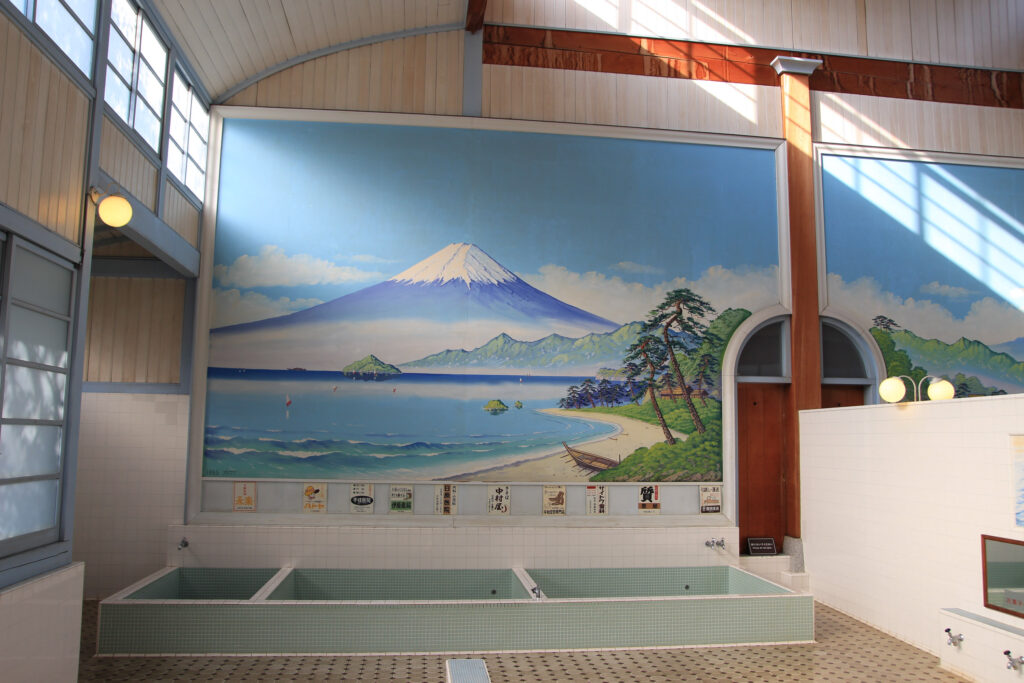
If you want the mineral water without the overnight commitment, day-use plans are legitimate and often excellent. Naoshima, for example, has an onsen with a Hiroshi Sugimoto-designed interior that you can visit without staying — worth pairing with an overnight on the island if you’re already there (see Naoshima Overnight: Why You Should Stay the Night (Not Just a Day Trip)). Urban sento (銭湯) — public bathhouses, usually without natural hot spring water — are cheaper still and exist in almost every neighborhood. Not the same experience, but a useful practice run.
The Thing No Guidebook Says
The ryokan experience is not the bath. The bath is the beginning. The thing you’re actually paying for is a single night where someone else has considered every detail of your physical comfort, from the firmness of the futon to the temperature of the soup, and where the only thing asked of you is that you slow down.
Most people leave an onsen ryokan wondering why they waited so long. The second thing most people wonder is why they only booked one night.
ゆっくり