How to Use a Japanese Sento Without Embarrassing Yourself
There is a moment, about thirty seconds after you walk through the curtain of a sentō (銭湯) for the first time, where you will have absolutely no idea what to do next. There’s a wooden counter, a small elderly woman who already knows you’re lost, rows of lockers, and through the frosted glass door ahead, the sound of water and low conversation. You are holding a small towel and a bottle of shampoo and none of your research has prepared you for this specific moment.
This is fine. Everyone was confused the first time. The difference between a good first visit and a bad one is knowing what comes next.
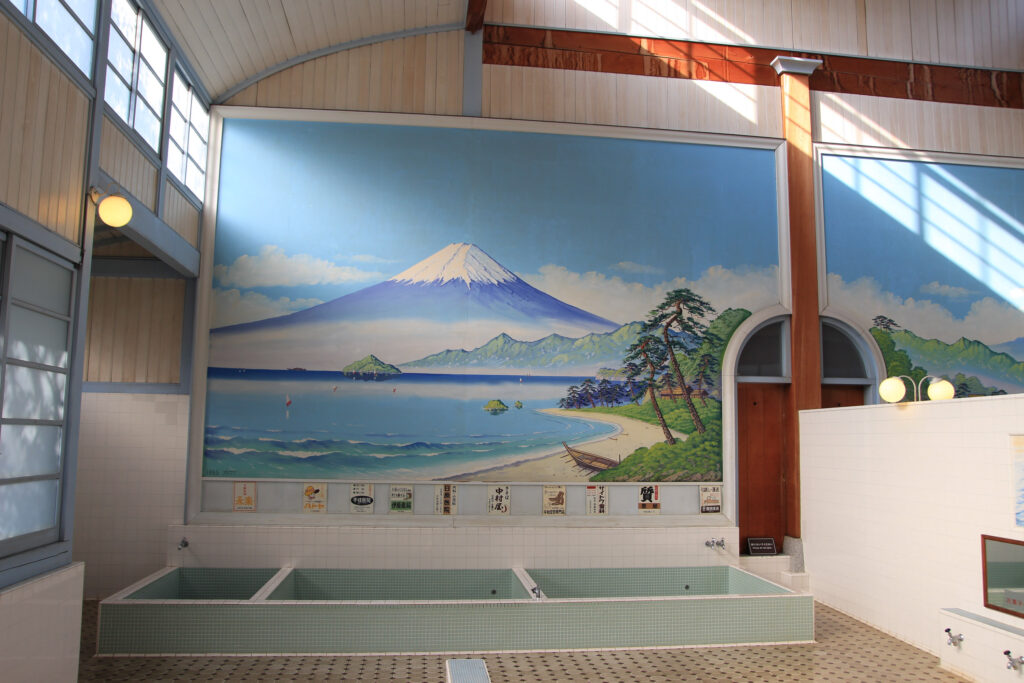
The sentō is not an onsen. Where onsen (温泉) draw on natural hot spring water and tend toward the ryokan-and-tourism end of the spectrum, the sentō is a neighborhood bathhouse — a civic institution, utilitarian in origin, that has been part of working Japanese life since the Edo period. The water is heated tap water. The clientele is mostly local. The price is set by the prefecture and currently sits around ¥500 in Tokyo. It is, in other words, not a spa experience. It is closer to a very good shower that you take in public, surrounded by people who have been doing this their entire lives.
Before You Go In
Find the noren (暖簾) — the split curtain hanging over the entrance. Blue or dark curtain is men’s (otoko, 男). Red or pink is women’s (onna, 女). Some sentō have yu (湯) written on them, meaning “hot water,” which tells you nothing about which side is which — look for the kanji instead.
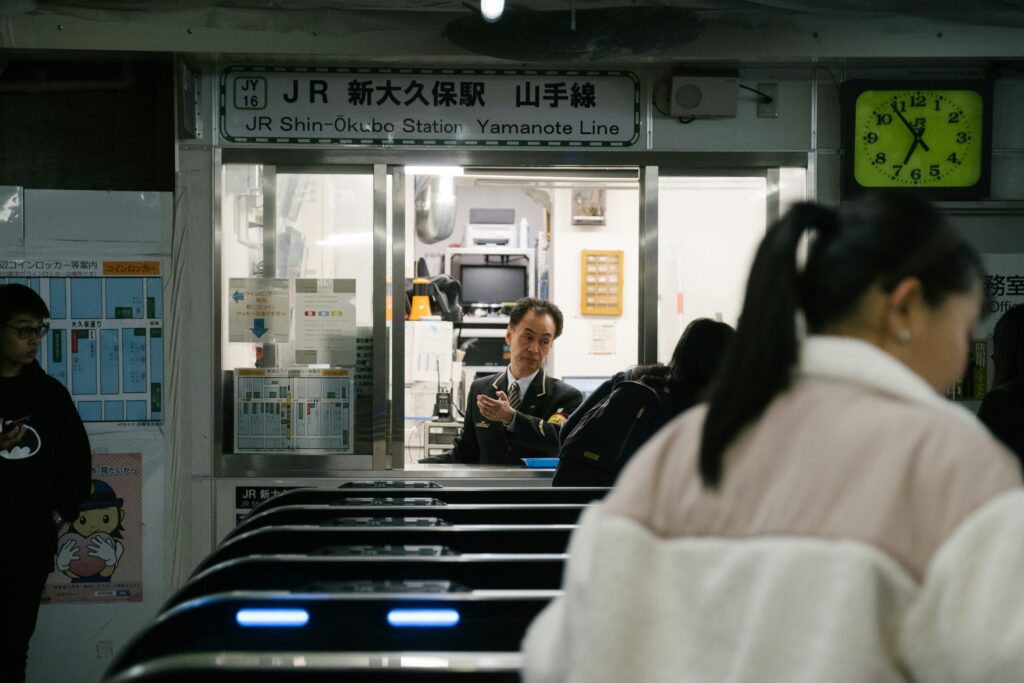
Pay at the front counter (bandai, 番台) or at a machine just inside the entrance. You’ll get nothing in return except the right to proceed. Soap, shampoo, and conditioner are not provided as standard — bring your own or buy small bottles from the counter. A rental towel is usually available for ¥50 or so, but regulars bring their own small tenugui (手ぬぐい), a thin cotton towel that dries fast and takes up almost no space.
Leave your shoes in the lockers at the entrance — small coin lockers, ¥10 or free, coin returned on exit. Then go through to the changing room, strip completely, and put everything in the larger locker. The small towel comes with you into the bathing area. Nothing else.
The Washing Ritual
This is the part that matters most, and the part most likely to cause problems if you skip it. You do not get into the bath dirty. You do not get into the bath dirty. This is not a preference or a suggestion. It is the foundational rule of communal bathing in Japan, and violating it will earn you a look from a seventy-year-old man that will stay with you for years.
Find an empty kama (カマ) — a low stool in front of a wall-mounted shower station with a mirror, a handheld showerhead, and two taps. Sit down, fill the small oke (桶, plastic basin) with warm water, and wash yourself thoroughly. Shampoo, soap, rinse. Check your back. Rinse again. Only when you are completely clean do you approach the main bath.
“The bath is not where you get clean. The bath is the reward for having gotten clean.”
Ease in slowly. The water is hotter than you expect — typically between 42°C and 44°C, which is hot enough to feel aggressive for the first thirty seconds and extraordinary for the thirty minutes after that. Sit. Don’t splash. Keep the small towel out of the water — fold it and rest it on your head, which is what everyone else is doing and which turns out to be correct for both practical and aesthetic reasons.
Reading the Room
The sentō is a quiet place. Not silent — there’s water noise, the occasional conversation between regulars, someone refilling their basin — but the register is low and unhurried. Match it.
Don’t stare. This sounds obvious but the instinct when you’re somewhere unfamiliar is to look around constantly, and in a sentō that reads as intrusive. Eyes forward, or eyes closed.
Tattoos are a separate conversation. The official policy at most sentō is no tattoos, a rule rooted in historical associations with yakuza (ヤクザ) that has proven remarkably durable despite the obvious demographic shifts in who actually has tattoos in 2024. In practice, enforcement varies enormously — many smaller neighborhood sentō quietly ignore small or covered tattoos, particularly on obvious foreign visitors. The honest answer is: call ahead, cover what you can with waterproof bandaging if the tattoo is small, and accept that some places will turn you away. The ones that do are not being personally hostile. They are following a rule that predates you.
| Situation | What to do |
|---|---|
| Unsure which entrance | Look for 男 (men) or 女 (women) on the noren |
| Forgot soap/shampoo | Buy small bottles at the counter |
| Water is too hot | Move to a cooler secondary bath, or sit on the edge |
| Tattoo policy unclear | Ask at the counter before undressing |
| Someone speaks to you | Respond simply, smile, don’t panic |
The Regulars
The people who use a neighborhood sentō are, by definition, the people who live in that neighborhood. This makes it one of the more reliable places in Japan to have an actual conversation with someone who is not in the tourism industry and has no particular reason to perform hospitality at you.
It usually starts in the changing room, or at the washing stations, or while two people are simultaneously staring at the same patch of wall in the hot bath. Someone will make a comment about the water temperature, or notice your confusion with the locker, or simply ask where you’re from in the way that people do when they’re genuinely curious rather than making small talk. These conversations tend to be short and warm and end with a nod and the word otsukaresama (お疲れ様) — roughly “good work today,” but used here as something closer to “good bath to you.”
Don’t try to force it. The sentō is not a networking event. But if a conversation starts, follow it.
The Thing No Guidebook Says
Every guide about sentō will give you the etiquette, the washing protocol, the tattoo warning. What they won’t tell you is what the experience actually does to your sense of where you are.
There is something specific about sitting in very hot water in a tiled room with people who have been coming to this exact building since childhood — people who know the staff by name, who have a preferred washing station, who have been having the same conversation with the same neighbor for twenty years — that makes you feel the texture of a place in a way that no temple or market or observation deck can replicate. You are not sightseeing. You are briefly inside the daily life of a city, and the city is not performing anything for your benefit.
Go once, follow the rules, and sit quietly in the hot water until you stop thinking about what to do next. That’s when it starts working.
Otsukaresama deshita.