Somewhere between the convenience store and the quiet end of a residential street, there’s usually a small wooden or metal board mounted to a post, a wall, or a utility pole. It doesn’t announce anything urgent. It doesn’t flash or beep. It just stands there, slightly weathered, covered in laminated A4 sheets and hand-written notices in careful Japanese script. Most foreign visitors walk right past it without a second glance.
That board is called a kairanban (回覧板) notice system in its circulated form, or more broadly, a keijiban (掲示板) — a neighborhood notice board. And if you slow down long enough to actually look at one, you’ll find a small, honest window into how Japanese communities actually function.
What These Boards Actually Say
The notices pinned to a typical neighborhood board are rarely dramatic. You might find a reminder about garbage sorting rules — which day accepts cardboard, which accepts plastic containers, why certain items need to be left at specific drop-off points. There’s often a schedule for the local jichikai (自治会), the neighborhood association that quietly manages the social infrastructure of Japanese residential life.
Sometimes there’s a handwritten notice from an elderly resident asking if anyone has seen a missing cat. A child’s drawing announcing an upcoming summer festival at the nearby shrine. A laminated sheet from the ward office explaining new recycling regulations. A flyer for a free health screening at the community center, printed in a font size large enough for older eyes.
None of it is glamorous. All of it is real.
The Jichikai: The Invisible Engine Behind the Board
To understand why these boards exist, you need to understand the jichikai — or its regional equivalent, the chōnaikai (町内会). These are voluntary neighborhood associations that have existed in Japan in various forms for well over a century. They organize local festivals, coordinate disaster preparedness drills, manage communal spaces, and serve as the unofficial communication layer between residents and local government.
The notice board is their primary public voice.
Japan has a long cultural tradition of community self-governance at the local level. The jichikai model reflects a broader social value — the idea that the health of a neighborhood is a shared responsibility rather than something delegated entirely to authorities. When the city ward needs to communicate a change in water service, or when a local school needs volunteers for a cleanup day, the notice board is often the first place that information appears.
It’s low-tech, deliberate, and surprisingly effective.
The Kairanban: A Notice That Travels Door to Door
The kairanban takes the concept one step further. Rather than a fixed board, it’s a physical clipboard or folder containing notices that passes from household to household within a designated block. Each resident reads the contents, stamps or signs their name to confirm they’ve seen it, and passes it to the next neighbor on the list.
This practice has existed in Japan for generations. It assumes that neighbors know each other, or at least know where each other lives. It requires a small but genuine act of participation — you can’t simply scroll past it.
For long-term residents, the kairanban is a familiar rhythm of neighborhood life. For newcomers — Japanese or foreign — receiving one for the first time can feel unexpectedly touching. Someone has included you in the loop. You belong to this street now.
What a Foreign Visitor Can Learn From Stopping to Look
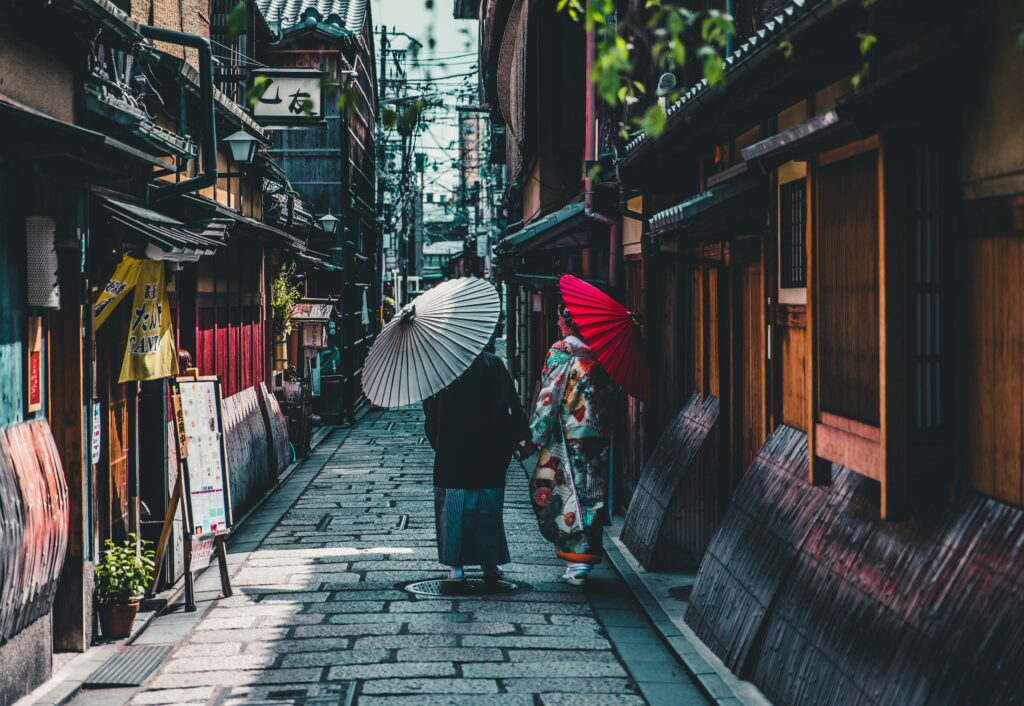
If you’re traveling through Japan and you find yourself in a residential neighborhood — in Kyoto’s older machiya districts, in a quiet corner of Tokyo’s Suginami ward, in a small town in Niigata or Yamaguchi — take a moment to stop at a neighborhood board when you find one.
You don’t need to read Japanese fluently to pick up something from it. The visual language alone tells a story. Notice the careful lamination protecting notices from rain. The precise alignment of papers. The handwritten additions in neat script alongside official printed sheets. The small illustrations sometimes included to help elderly residents or children understand a message.
This is a community communicating with itself. That act of communication reflects something important about Japanese social culture — the preference for clarity, the respect for everyone’s time, the assumption that information should reach everyone rather than only those who seek it out.
What the Garbage Schedule Reveals
Nearly every neighborhood board in Japan includes a garbage collection schedule. To a visitor, this might seem mundane. In reality, it’s one of the more revealing documents in Japanese civic life.
Garbage sorting in Japan is extraordinarily detailed. Depending on the municipality, residents may separate waste into five, eight, or even more distinct categories. The rules vary by ward and by city. Putting the wrong item in the wrong bag on the wrong day is genuinely considered a social transgression — not because someone will penalize you, but because the system depends on everyone following it.
The notice board communicates this system not as a legal requirement but as shared knowledge. It trusts residents to understand and comply. That trust, extended publicly and without enforcement, says something about the social contract Japanese communities operate under.
Disaster Preparedness Notices
Japan sits on one of the most seismically active regions on Earth. Typhoons, floods, and earthquakes are not abstract threats — they’re scheduled realities that communities prepare for together. Neighborhood boards frequently post evacuation maps, shelter locations, and emergency contact information.
These aren’t panic-inducing notices. They’re calm, practical, and matter-of-fact. The tone mirrors the broader Japanese approach to disaster preparedness: not fearful, but ready. The jichikai often organizes annual disaster drills, and the board announces them well in advance so residents can plan to attend.
Seasonal Changes on the Board
One of the quiet pleasures of paying attention to neighborhood boards over time is watching how they change with the seasons. In late spring, you’ll find notices about the upcoming matsuri season — which local shrines are holding festivals, what volunteer roles need filling, whether the traditional mikoshi portable shrine procession will pass through the street. In autumn, there are reminders about fallen leaf disposal and preparations for colder weather. In winter, notices about snow removal responsibilities appear in northern regions.
The boards track community life in a way that no social media platform quite replicates. There’s no algorithm deciding what you see. Everything posted there was decided by someone who lives nearby and thought their neighbors should know.
The Digital Shift and What’s Being Lost
Younger residents and urban neighborhoods are increasingly moving to digital equivalents — LINE group chats, ward office apps, email newsletters from the jichikai. The physical kairanban is declining in some cities, particularly in areas with high apartment turnover and younger demographics who feel less connected to traditional community structures.
There’s an honest tension here. The old system assumed a stable neighborhood where people lived for decades and knew their neighbors by sight. Modern urban Japan — particularly Tokyo — includes a large population of renters who move frequently, foreign residents unfamiliar with the system, and young professionals who work long hours and have little time for community participation.
Some jichikai have adapted well. Others have struggled to stay relevant. A few have dissolved entirely in neighborhoods where nobody stepped forward to maintain them.
Why This Matters to Travelers
Understanding the neighborhood notice board changes how you see Japanese residential streets. What looks like administrative clutter is actually the visible surface of an entire system of mutual responsibility and quiet civic care.
When you walk through a Japanese neighborhood and notice how clean the streets are, how carefully the garbage is separated, how the local park is maintained by volunteers rather than only by city workers — the notice board is part of the explanation. These things don’t happen automatically. They happen because someone organized them, posted about them, and enough neighbors showed up.
Japan’s reputation for orderliness is sometimes attributed to a kind of cultural obedience. That reading misses something. The more accurate picture is one of active, ongoing, locally organized cooperation — and the notice board is where that cooperation is coordinated.
How to Find Them
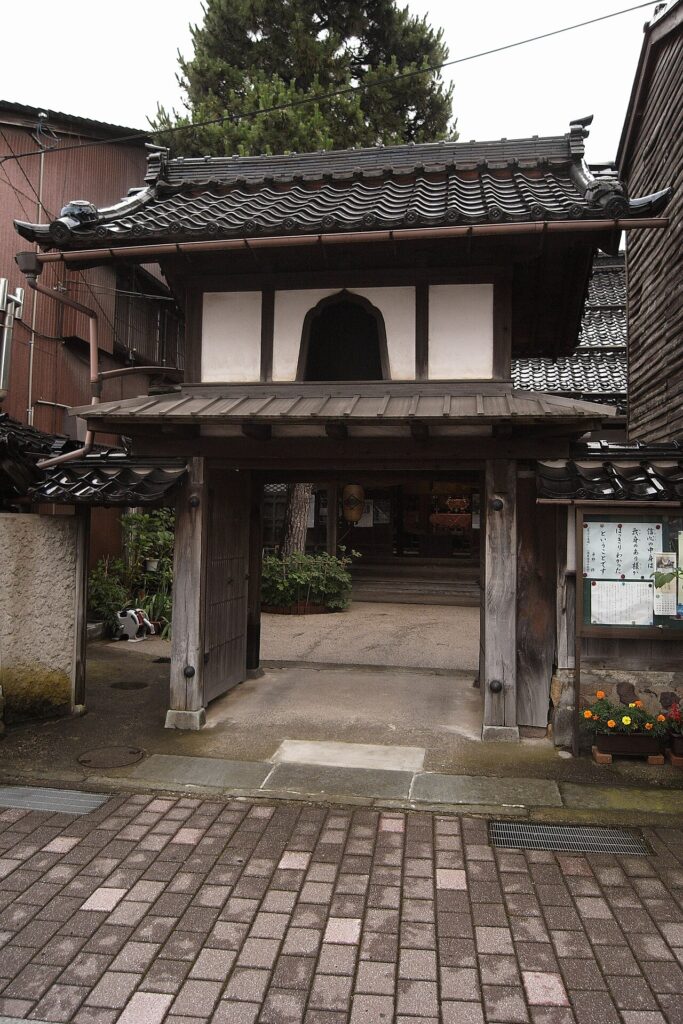
Neighborhood notice boards are most visible in residential areas away from tourist centers. Look for them near the entrance to residential blocks, beside community centers, at the base of apartment buildings, or mounted to walls near small neighborhood shrines. They’re almost always present in older neighborhoods, particularly in cities like Kyoto, Kanazawa, Matsumoto, Nagano, and in the quieter residential wards of Tokyo such as Yanaka, Koenji, Shimokitazawa, and Kagurazaka.
You won’t find them listed in any guidebook. You find them by walking slowly and looking at the things that weren’t designed to be looked at by visitors.
The next time you’re standing on a quiet Japanese street and you notice a small board covered in laminated notices, stop for a moment. You’re not looking at bureaucracy. You’re looking at neighbors talking to neighbors — carefully, consistently, and without any expectation of being noticed for it.