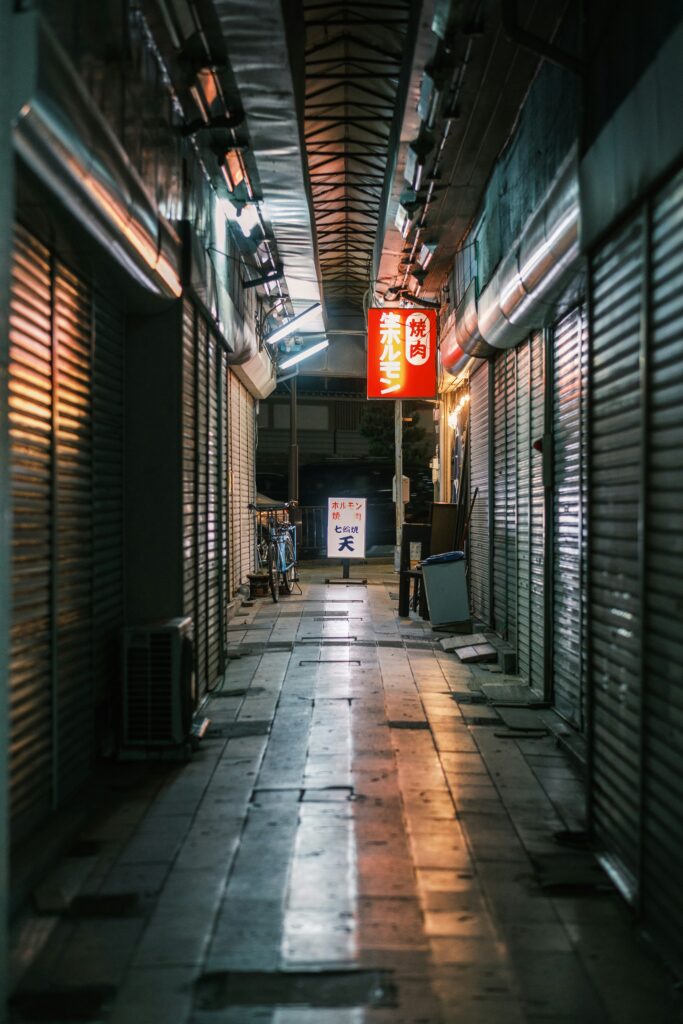
There is a specific kind of loneliness that only exists in Japan at three in the morning. Not the heavy, crushing kind — more like a quiet hum, a low-frequency awareness that the city is still alive even when it seems to have gone to sleep. You find it most clearly inside a konbini (コンビニ), standing under fluorescent lights with a warm can of oshiruko (お汁粉) in one hand and no particular reason to be there.
Most travel writing about Japanese convenience stores focuses on the food — the onigiri, the hot snacks, the surprisingly decent sandwiches. That’s all true. But it misses the more interesting story, which is what the konbini actually is at the edges of the day, when the usual customers have gone home.
The Shift Nobody Mentions
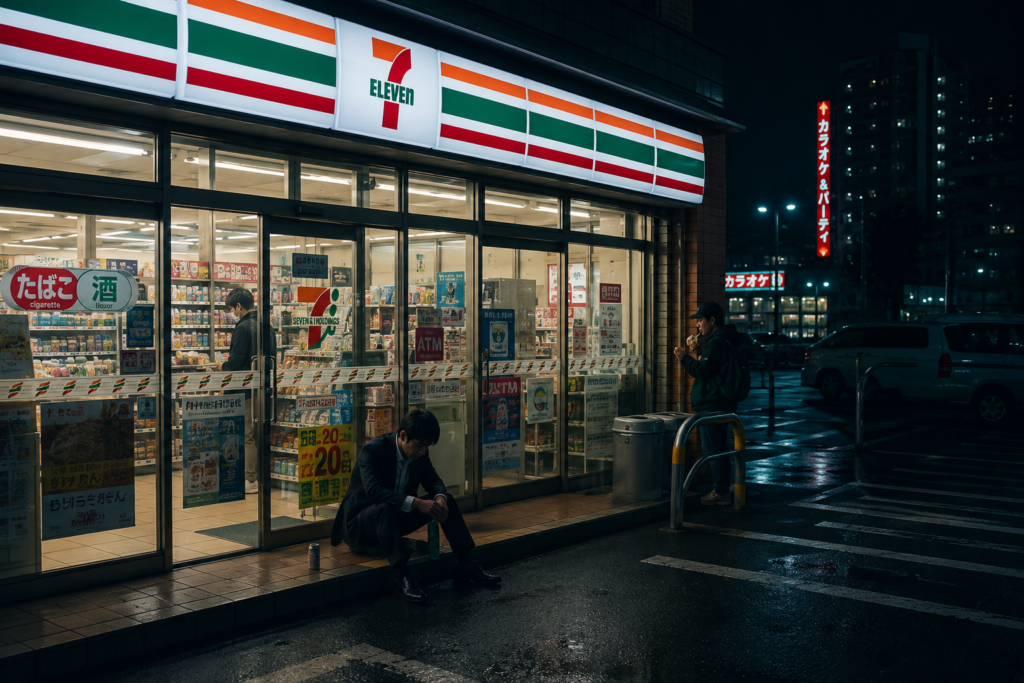
Walk into a 7-Eleven in Shinjuku at 3am and you will find a very specific cast of characters. The salary worker who missed the last train, nursing a beer in the parking lot with the quiet dignity of someone who has accepted his situation. The elderly man reading every magazine on the rack, in no hurry, going nowhere. The delivery driver eating a nikuman (肉まん) standing up at the counter because there is nowhere else open. The occasional foreigner who wandered in looking for water and stayed for twenty minutes because the warmth was unexpectedly welcome.
The konbini does not judge any of them. This is not a small thing in a country where public behavior is governed by an elaborate, largely unspoken set of expectations. The convenience store is one of the few genuinely neutral spaces in Japanese urban life — a place where the usual social sorting mechanisms are suspended, at least temporarily.
What You Can Actually Buy at 3am
The full inventory of a Japanese convenience store is available around the clock, which is more significant than it sounds.
| Category | What’s Available | Price Range |
|---|---|---|
| Hot food | Oden, nikuman, fried chicken | ¥100–¥250 |
| Alcohol | Beer, chuhai, sake, whisky | ¥150–¥600 |
| Hot drinks | Coffee, oshiruko, corn soup | ¥100–¥180 |
| Services | ATM, printing, bill payment, ticket purchase | Varies |
The services column is what most tourists overlook. At 3am, you can pay your electricity bill, print a document, buy a concert ticket, or withdraw cash from an ATM that actually works. Japan’s konbini infrastructure is, in practical terms, more reliable than most government services in other countries.
The Staff at the Edge of the Night
“The night shift konbini worker occupies a strange position in Japanese society — essential, invisible, and almost never discussed.”
Most of them are foreign. This is not a secret, but it is rarely acknowledged in the cheerful coverage of convenience store culture. The workers who keep these stores running through the small hours are frequently international students, visa holders, people navigating a system that offers them limited options. They are unfailingly polite, efficient, and almost entirely absent from the narrative of what makes Japanese convenience stores special.
Next time you’re in a konbini at an unreasonable hour, look at the name tag. Say arigatou gozaimasu (ありがとうございます) like you mean it.
The Thing No Guidebook Says
The standard advice is to visit a Japanese convenience store for the food, marvel at the efficiency, take a photo of the egg salad sandwich, and move on. This is fine as far as it goes.
But the konbini at 3am is something different — it is one of the few places in Japan where the social performance that governs most public interactions is quietly dropped. Nobody is performing anything at three in the morning. The salary worker in the parking lot is not being a salary worker. The student eating instant noodles at the standing counter is not being a student. For a few minutes, under lights that are slightly too bright, everyone is just a person who needed somewhere to be.
You can learn more about a country from its edges than from its highlights. The konbini at 3am is one of Japan’s edges.
Otsukaresama.