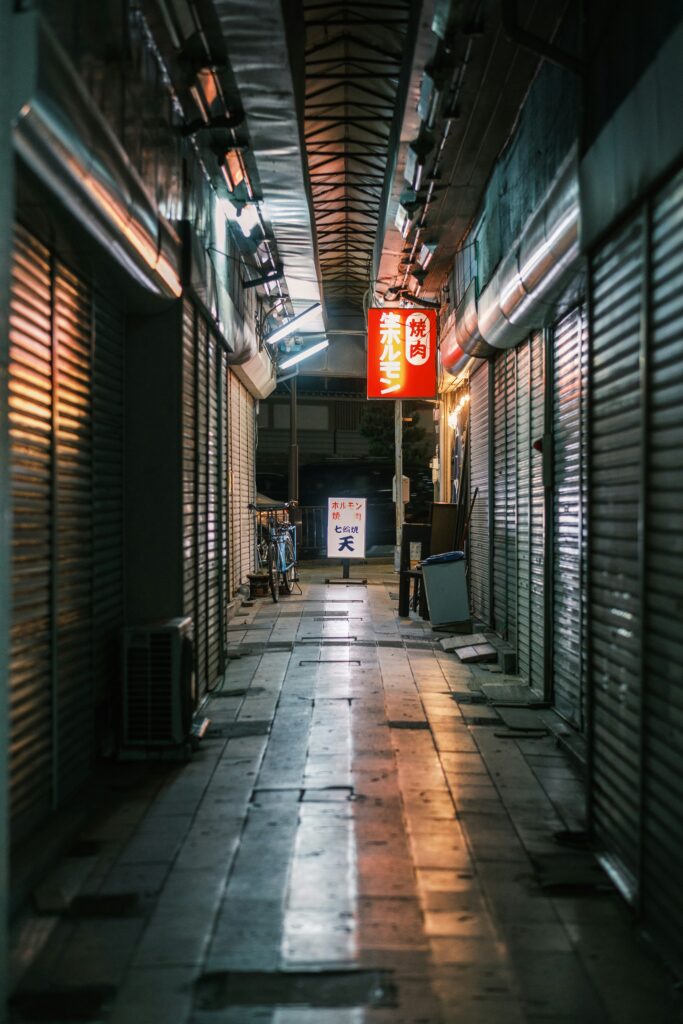
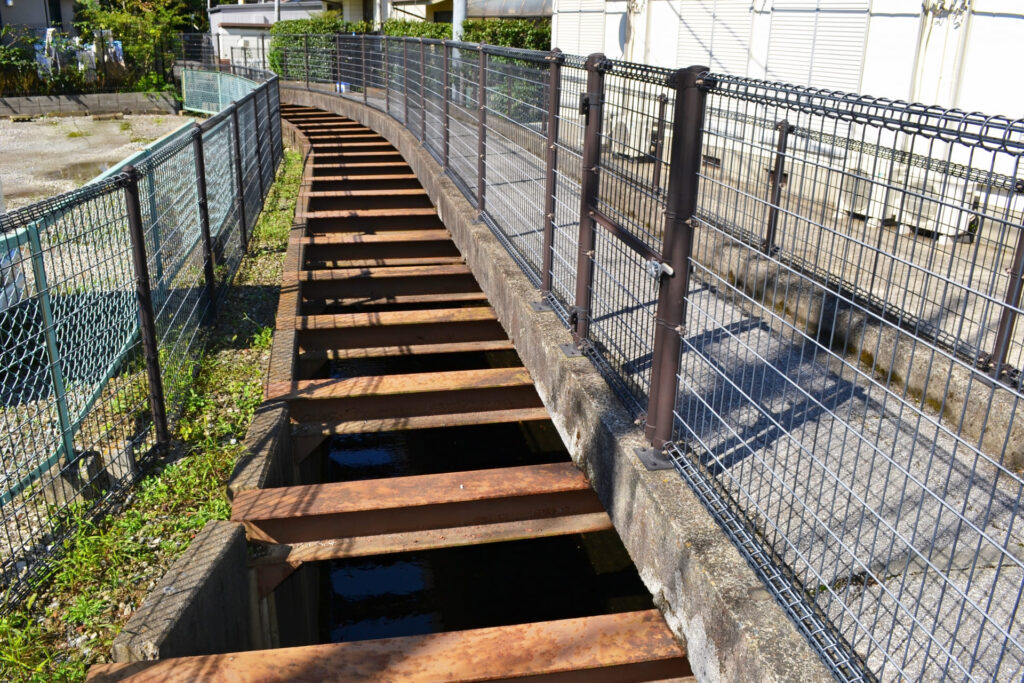
Walk through the streets of Tokyo long enough and you’ll come across roads that curve strangely for no obvious reason, oddly narrow, elongated parks, or pedestrian paths where cars simply can’t go. Often, what you’ve stumbled upon is an “ankyo” (暗渠) — the buried trace of a river that once flowed there.
What Is an Ankyo?
An ankyo is a waterway or river that has been covered over or buried underground, disappearing from view at street level. As Tokyo urbanized, many small and mid-sized rivers were converted into sewer systems or filled in entirely to make way for roads and housing. But the water often keeps flowing beneath the surface — and even where it doesn’t, the land itself remembers. The terrain retains the shape of the river long after the river itself has vanished.
Why People Are Drawn to Them
1. The Land’s Memory
An oddly curving street, a stretch of ground sitting slightly lower than its surroundings, a bus stop or intersection named after a bridge that no longer exists — these small inconsistencies are the fingerprints of a buried river. Piecing together old maps with what you see on the ground turns a simple walk into a kind of detective work. The moment you realize, “there must have been a river here,” is genuinely satisfying.
2. A Landscape That Still Smells of Everyday Life
The paths that trace old riverbeds are often lined with the remnants of old embankments, unusually narrow alleys shaped by the water that once ran through them, and Showa-era shops and houses that redevelopment never got around to. These are neighborhoods with real texture — lived-in, unpolished, and far from the manicured feel of newer parts of the city.
3. Imagining What You Can’t See
No water actually flows here anymore, and yet walking an ankyo means mentally reconstructing that vanished current — picturing where it bent, where it widened, where it used to catch the light. That act of imagination, layered onto an ordinary street, is a big part of what makes ankyo walking distinct from other kinds of urban exploration.
4. The Pleasure of Finding What No One Else Notices
These aren’t tourist destinations. They don’t appear in guidebooks. Which is exactly why finding one — and understanding what you’re looking at — feels like a discovery that belongs to you alone.
Notable Ankyo Spots in Tokyo
- Shibuya River / Udagawa remnants (Shibuya)
- Yabata River (toward Ikebukuro and Koishikawa)
- Tsurumaki River, a tributary of the Kanda River (Zoshigaya)
- Kani River (Shinjuku)
These routes show up again and again in books and blogs dedicated to “ankyo walking” (暗渠散歩), a small but devoted subculture of urban explorers in Japan.