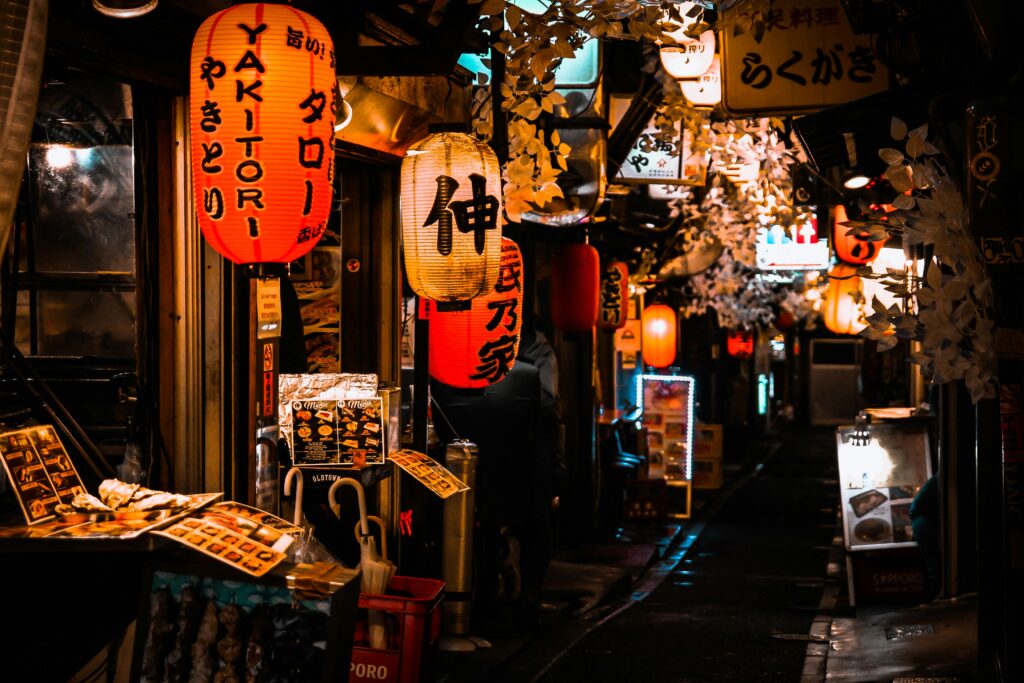
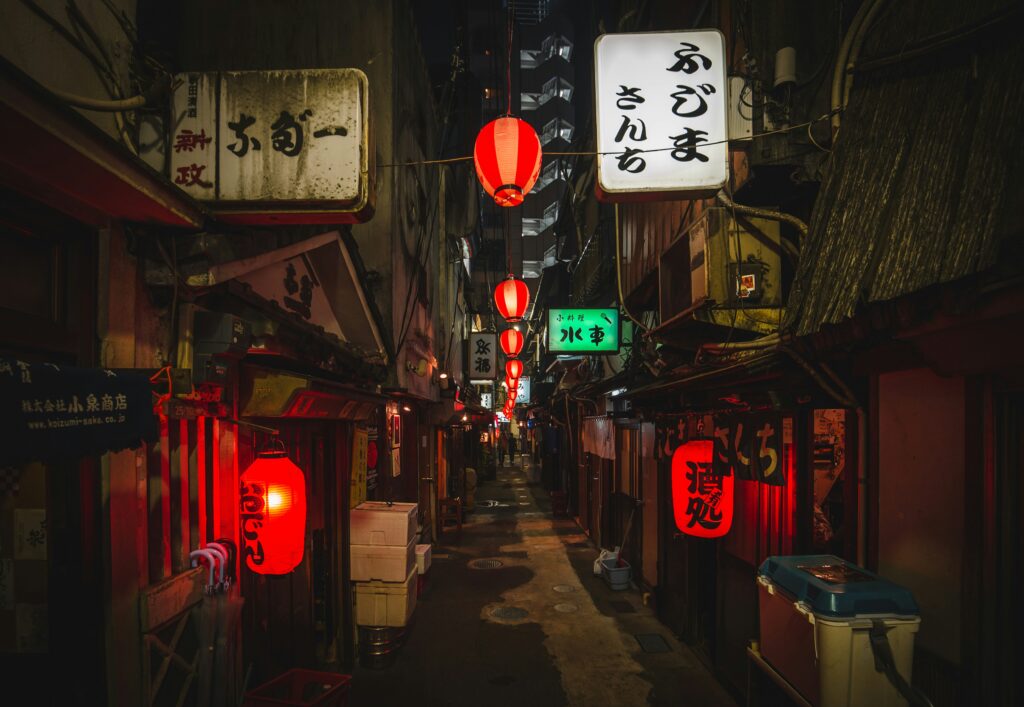
Somewhere between the salary worker loosening his tie and the stranger offering to refill your glass, you stop being a tourist. That’s tachinomi — and no ryokan check-in or temple visit will get you there faster.
Tachinomi (立ち飲み) translates simply as “standing and drinking.” In practice, it is something far richer: a centuries-old social tradition that flattens hierarchies, dissolves the usual Japanese reserve, and creates the unlikely conditions for genuine human contact between strangers. For travelers, it is arguably the single best portal into everyday Japanese life that exists.
What It Is
A tachinomi-ya is a standing bar — typically compact, often rough around the edges, almost always loud in a warm way. There are no seats, or almost none. You stand at a counter or narrow ledge, shoulder-to-shoulder with whoever happens to be there. Beer runs around ¥400. A small plate of yakitori costs less than a coffee at the airport. The physical proximity, combined with the low prices, is the entire point.
The format has deep roots in Japanese working culture. After long office hours, tachinomi-ya were designed for the quick, affordable release valve — a drink or two before the last train home. Unlike the seated izakaya, which implies a longer, more deliberate evening, standing bars keep things casual and unencumbered.
“You can arrive alone at 6pm and be deep in conversation with a stranger by 6:20. No booking, no occasion, no performance required.”
Why It Works for Travelers
Japan has a well-deserved reputation for formality and social caution. The usual tourist encounter — at a shrine, a restaurant, a convenience store — involves scripted pleasantries and invisible walls. Tachinomi breaks those walls by design. Alcohol helps, yes, but the architecture does most of the work. Standing eliminates the protected territory of a reserved table. The communal ledge means you are, physically, sharing space with strangers from the first moment. And the low cost removes the transactional formality that lingers when you’re worried about someone’s bill.
Locals come to decompress, not to perform hospitality. This is the crucial difference. When a salary worker three drinks deep turns to ask where you’re from, it’s not rehearsed kindness — it’s the natural impulse of a person who’s having a good evening and is standing next to someone interesting.
How to Navigate a Tachinomi
To make the most of your first standing bar experience, keep these four simple principles in mind:
01. Go Alone or in a Pair
Two or more travelers create a closed group. Solo, you’re naturally open — and far more approachable to locals looking for easy conversation.
02. Arrive Around 6 PM to 7 PM
The after-work crowd filters in from around 6. This is peak tachinomi hour — energy is high, people are relaxed, and the drinks haven’t run too deep.
03. Order the House Beer First
Don’t overthink it. A draft beer (nama-biiru) is the universal entry ticket. It signals you belong here, not at a hotel bar.
04. Let the Topping-Off Happen
In Japan, topping off someone’s glass is a gesture of inclusion. Accept it. Return it. This is how friendships start in standing bars.
Where to Find It
The best tachinomi-ya are rarely the ones on tourist maps. Look for stations that office workers actually use (Shimbashi in Tokyo is the classic; Namba and Fukushima in Osaka). Look for hand-written menus in the window, plastic crates used as counters, the unmistakable sound of ice in a glass. Areas just outside major station gates around 6pm — yokocho (the narrow alley drinking districts) — are a natural habitat.
Osaka has a particular claim on tachinomi culture. The city’s directness and its deep food-and-drink tradition kuidaore — “eat until you drop” — make its standing bars among the most welcoming in Japan. A stranger in an Osaka tachinomi-ya will have acquired at least one local recommendation and possibly a phone number within thirty minutes.
“The best tachinomi-ya are the ones that look like they could close any day, but haven’t in forty years.”
Essential Vocabulary
| Situation | Say | Meaning |
| 立ち飲み | Tachinomi | Standing and drinking; the practice and venues that host it |
| 生ビール | Nama-biiru | Draft beer — the safe, universal opening order |
| 乾杯 | Kanpai | Cheers — raise your glass before drinking |
| おいしい | Oishii | Delicious — useful at all times, always appreciated |
| もう一杯 | Mou ippai | One more — spoken to a neighbor, an invitation to continue |
The Thing No Guidebook Says
Japan is often described as a country where outsiders are warmly tolerated but rarely truly welcomed. This is a reasonable generalization in many contexts. The tachinomi-ya is a consistent, reliable exception. The narrow counter, the shared plates, the beers that appear as if by mutual agreement — these are not tourist experiences. They are the actual texture of daily life in Japanese cities, and for one evening, you are entirely inside it.
No itinerary survives contact with a good standing bar. That is, in the end, the point.
Kanpai!