The question: How do you board and pay from a small, unattended station in Japan when your IC card isn’t accepted? The short answer is simple. Board the local train, take a small numbered slip if there’s a ticket dispenser, or enter through the front door of the first car if there isn’t. Keep that slip as proof of where you started. Pay the fare either to the driver when getting off or at a fare-adjustment machine or staffed counter at your destination. Carry coins and a ¥1,000 bill for change. That’s the whole system in one breath.
What looks confusing at first is a straightforward honor-based method used across rural lines. With a little preparation—coins in your pocket and an eye for a few key signs—it becomes an easy part of traveling beyond the big cities.
What “Unattended” Means in Japan’s Rail System
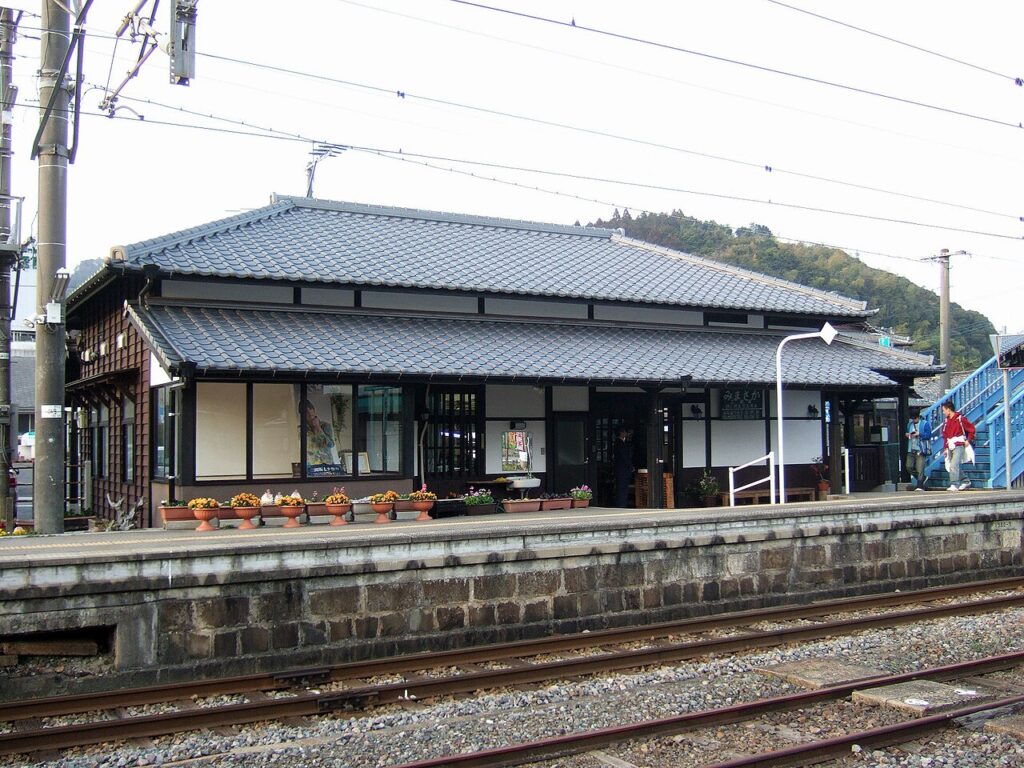
In Japanese rail, “unattended” (often called a mujin-eki) doesn’t mean abandoned. It means there’s no staff on site at most hours. The platform might be a single track with a shelter and a timetable. There may be no ticket gates, and sometimes no machines at all. Yet the trains arrive on time, the doors open, and a routine shaped by trust takes over.
On these lines, especially local and third-sector routes, the system relies on proof of boarding and settling up later. The logic is similar to rural buses: you indicate where you started, then pay the correct amount at the end. Trains like this are often called “one-man” (wanman) when the driver handles both driving and fare collection at small stops. Rules vary by company, so it helps to recognize the patterns rather than memorize a single script.
Step-by-Step: Boarding and Paying from an Unattended Stop
Most travelers encounter one of three scenarios. Here’s how each typically works.
If there’s a numbered paper ticket (整理券)
- Look for a small dispenser labeled 整理券 (seiriken) where you board—on the platform or inside the first car. Take a slip as you get on. The number corresponds to your boarding stop.
- Keep the slip visible until you get off. Above the driver or inside the car, a board may display fares by number. This shows how much you owe based on where you started.
- When getting off at a small station, exit at the front door near the driver and pay the displayed fare. If you end at a larger station with gates, go to the fare-adjustment machine or a staffed window and pay there. Hand over the slip if asked.
If there’s no ticket—board at the front car
- Some lines have no slips. Signs may mark 乗車口 (boarding) at the front door of the first car and 降車口 (alighting) there as well.
- In this case, tell the driver your origin if asked, or check the in-car fare chart for the current fare from your station. Pay when you get off at the front. Exact change helps.
- On cold-weather lines, doors don’t always open automatically at every stop. Look for a door button beside the door. Press to board or exit.
If you have an IC card but can’t tap out
- IC coverage is patchy outside metro areas. If you boarded in an IC area and ride into a non-IC area, you may not be able to tap out.
- At a staffed exit, explain that the trip crossed an IC boundary. Staff can settle the fare and reset your card. If there’s a fare-adjustment machine, follow the on-screen prompts to pay the balance in cash.
- If the destination is small and unstaffed, pay the driver in cash when you get off. If you already tapped in elsewhere and are unsure what to do, use the intercom at the gate (where present) or visit the staffed counter at the next opportunity to correct the record. Staff handle this routinely.
Fare Adjustment at the Destination: Machines, Counters, and Gates
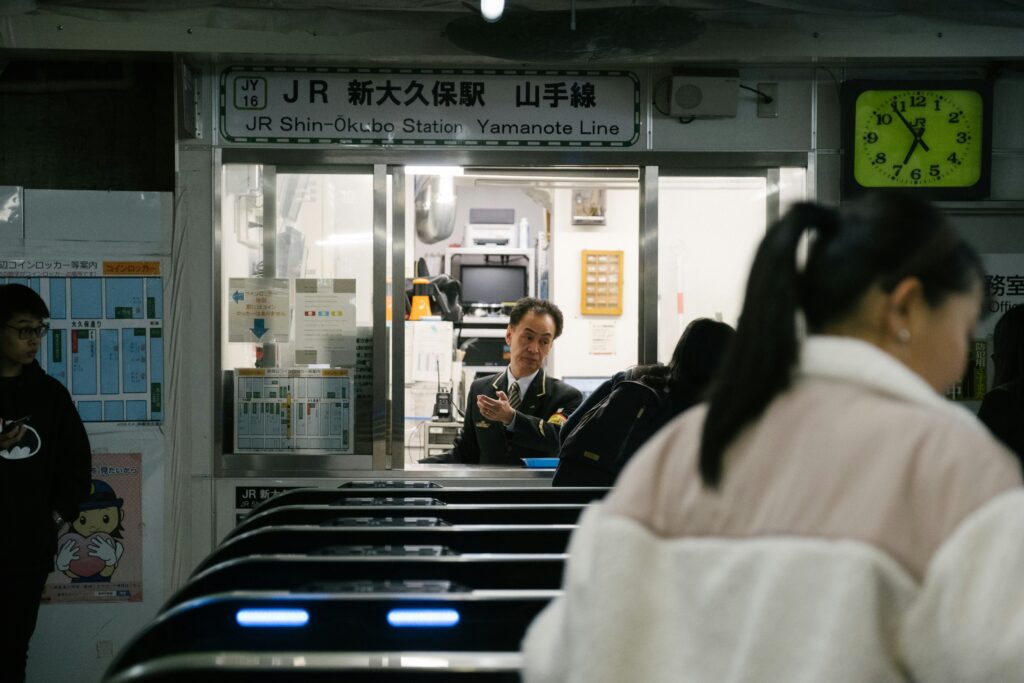
Large and mid-sized stations usually have a 精算 (seisan) machine near the ticket gates. This is the fare-adjustment machine. Insert your paper ticket or select your origin on the screen, then pay the difference in cash. Machines commonly accept coins and ¥1,000 bills. Some also handle IC card fare adjustments within the card’s valid area.
If you reach a staffed station without a ticket, explain your origin and show any slip if you took one. Staff will calculate the fare and issue a receipt or gate ticket. If there’s a line, this process still tends to move quickly; the steps are routine for commuters from unmanned stops.
At tiny destinations without staff or gates, exit at the driver’s door and place the cash in the fare box. Many drivers carry change for coins and sometimes break a ¥1,000 bill, but not higher. Policies vary, so have small money ready to avoid delays.
Money and Preparation: Coins, Small Bills, and Backup Options
Coins matter on rural transport. Carry ¥100 and ¥10 coins, and at least one ¥500 coin. A single ¥1,000 bill is often the largest note that small change machines on buses or one-man trains will break. Larger notes may not be accepted for change at all.
IC cards are still useful even when a station is unmanned. Within their coverage, they speed up boarding and transfers. But once outside those zones, paper and cash take over. Consider both systems as complementary rather than competing.
When planning rural hops, check first and last train times. Unattended stops may have long gaps between services, especially midday and late evening. If a connection is tight, stand near the front of the platform so you can exit by the driver’s door quickly when needed.
On slower local lines, a simple meal can turn a wait into part of the trip. For a primer on choosing train bento wisely—including when they’re meant to be eaten cold—see Should You Eat Ekiben Cold? How Japan’s Train Bento Are Meant to Be Eaten—and Chosen.
Reading the Signs—and What They Tell You About the System
A few words decode most unmanned-station puzzles:
- 無人駅: Unattended station. Expect no staff and limited machines.
- 整理券: Numbered slip for proof of boarding. Take one when you get on.
- 精算: Fare adjustment. Look for these characters near machines or counters at your destination.
- ワンマン (one-man): The driver also handles fare collection at small stops. Board and exit at the front unless signs indicate otherwise.
- 乗車口 / 降車口: Boarding and alighting doors. They may be the same door at the front on one-man operations.
This language points to a deeper logic: a network that values self-regulation. The trust is visible in small ways—a dispenser left unattended, a driver balancing schedules and payments, a machine that assumes accurate self-reporting. Accuracy matters because it keeps these marginal lines viable for the people who rely on them daily.
Etiquette and Timing at Small Stations
Etiquette on rural lines reflects the slower pace. Start with quiet. Phone calls are rare in cars, and voices are low even when the car is nearly empty. If one door is marked for boarding, use it. If you took a slip, have it ready when alighting so the driver can tally the fare quickly.
Queue where floor markings or local practice suggest. In winter or extreme heat, doors may stay closed until you press the button; step back after pressing and let people off first. On short platforms, stand behind the safety line and watch the gap, which can be wider on old tracks. When stepping down to a low platform, move clear of the door before checking maps or bags.
Expect gaps in service. In some regions, trains may arrive only once or twice an hour outside peaks. When a canceled service or delay affects a rural line, alternatives can be limited. If a connection is critical, consider an earlier train and use the extra time for a walk near the station rather than risk a missed transfer later.
Trash bins can be sparse at small stations, and food wrappers may need to stay in your bag until the next town. Neighborhood waste points are not public bins; they’re for residents. For context on how local trash sites work in Japan, see Morning at the Gomi Station: What Japan’s Neighborhood Trash Points Reveal.
On Rural Buses, the Logic Repeats
Rural buses and unattended stations share the same trust-based approach. You usually board from the rear door, take a numbered ticket, and watch a fare board that updates as the bus moves through zones. When you get off at the front, place the ticket and exact fare into the box by the driver. Many buses can break a ¥1,000 bill into coins, but not larger denominations. Announcements may be only in Japanese, so track your stop name in advance and press the button well before it.
Where bus and train lines interlace, one can back up the other—useful when a last train is too early. Timetables can be thin in the middle of the day, so planning around lunch hours helps. Remember that what looks like an empty stop sign may be a community lifeline for students and older residents; pace and patience are part of traveling through.
At first glance, unattended stations suggest a gap in service. In practice, they reveal a compact contract between rider and system: board honestly, keep track of where you started, pay what’s due, and move on. It’s a small piece of infrastructure that works because almost everyone behaves as if someone is watching—when in fact, most of the time, no one is.