A Japanese neighbourhood notice board is easy to miss. It might be a weathered panel near an apartment entrance, a green board beside a community centre, or a few laminated sheets fixed to a wall on a quiet residential street. It is not designed for tourists. That is exactly why it can be useful.
For a visitor staying in a neighbourhood rather than a hotel district, these boards can explain the small changes that affect an ordinary day: a road closure, a water shut-off, a recycling schedule, a summer festival, or a disaster-preparedness drill. You do not need to read Japanese fluently to get something from them. You only need to know what to look for.
First, know the two things people mean by kairanban
People often use kairanban (回覧板) loosely when talking about neighbourhood notices, but the word traditionally refers to a clipboard or folder passed from household to household. Each resident reads it, stamps or signs it, then passes it on. A fixed public board is more accurately a keijiban (掲示板).
Both are connected to the chōnaikai or jichikai: local residents’ associations that organise the unglamorous work of a neighbourhood. They may coordinate clean-up days, seasonal festivals, evacuation drills, and the notices that keep residents aware of local changes. For the fuller cultural story behind these associations, read how neighbourhood notice boards work in Japan.
What to look for, even if you cannot read Japanese
Start with dates, times, maps, and repeated symbols. Japanese public notices are usually designed to be scanned quickly, so the useful information is often visually clear. A calendar grid may show a collection day. A small map may mark an evacuation site. A poster with a shrine gate, lanterns, or a cartoon character usually signals a local event rather than an emergency.
- Roadwork and utilities: Look for dates, times, a street map, and words such as kōji (工事, construction), suido (水道, water), or teiden (停電, power outage).
- Waste and recycling: A colour-coded table often shows collection days. Rules differ by municipality, so treat the board as a prompt to check your accommodation’s instructions rather than a universal guide.
- Disaster information: Maps may use symbols for an evacuation site or shelter. The words hinan (避難, evacuation) and hinanjo (避難所, shelter) are useful to recognise.
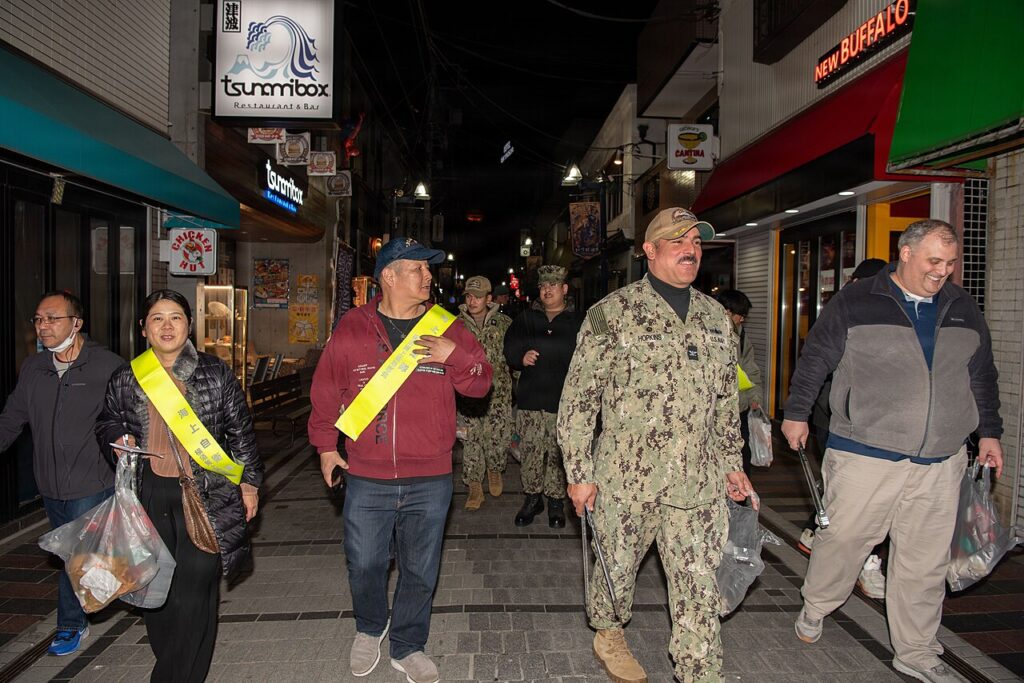
- Neighbourhood events: Festival, clean-up, and meeting notices often include a start time, a meeting point, and a contact number. They are usually for residents, so enjoy the information without assuming you are automatically invited.
How it can help during a longer stay
If you are in a rental apartment, guesthouse, or small town for more than a few nights, the board can answer the sort of questions guidebooks do not cover. Why is the street suddenly closed? Why are bags of rubbish outside at a different time? Why are people gathering at the shrine on Saturday morning? It gives you context, not an itinerary.
Be respectful. Do not remove notices, block the entrance while translating every line, or photograph personal names, phone numbers, children’s information, or anything that looks private. A quick glance is enough. The value is in noticing that the neighbourhood is communicating with itself.
Do not confuse a notice board with official travel information
A local board is useful for a sense of place, but it is not the best source for travel-critical information. For train disruption, weather warnings, accommodation rules, or emergency instructions, use official railway, municipal, or accommodation channels. If a notice affects the building where you are staying, ask your host or front desk to explain it.
The most interesting lesson is not that a visitor can decode every sign. It is that these boards make visible a layer of Japanese life that happens between individual homes and city hall. Once you notice that layer, residential streets begin to feel less anonymous.