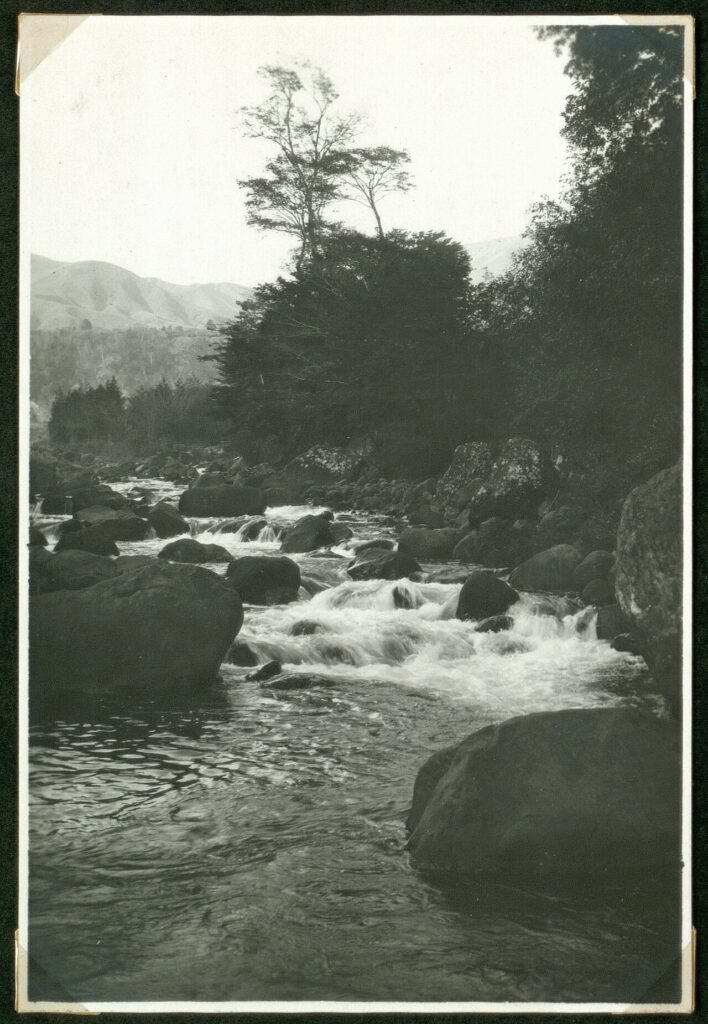
The boat barely makes a sound as it drifts downstream. The boatman — *sendo* (船頭) in Japanese — doesn’t speak much, which is fine, because the river does the talking. Steep cedar-covered cliffs press in from both sides, the water is the color of old jade, and somewhere above you, invisible through the canopy, is a road that almost nobody takes. This is the Mogami River gorge in Yamagata Prefecture, and it has been quietly doing this for centuries without requiring your approval.
Most people who visit Yamagata come for Yamadera, snap the obligatory photo of the stone steps ascending into the mist, and leave. A smaller number come in winter for Zao’s snow monsters. Both are worth your time. Neither of them tells you anything about what Yamagata actually is — which is a prefecture built on a river, shaped by a river, and still, in ways that feel almost stubborn, oriented toward a river that the modern economy has largely moved on from.
## The Mogami and the Towns That Grew Along It
The *Mogamigawa* (最上川) is one of Japan’s so-called three great rapid rivers — the others being the Fuji and the Kuma — which is the kind of designation that sounds ceremonial until you watch the current and understand that this water is genuinely moving. For the merchant culture of the Edo period, that speed was infrastructure. Rice, safflower, and lacquerware traveled downstream from the interior of Yamagata to the port town of Sakata, then out to Osaka via the Sea of Japan. The towns along the route grew fat and confident on this trade.
What’s left of that confidence is still readable if you know where to look. In Shinjo, at the northern end of the river route, there are kura — *kura* (蔵), those thick-walled storehouses — that still stand beside roads too narrow for two cars to pass comfortably. In Furukuchi, a village so small it barely registers on prefectural maps, an old merchant house has been preserved not as a museum with laminated signs, but as a lived-in building where the tatami still smells like tatami should. Nobody is trying to sell you anything here. That alone is remarkable.
## The Boat Ride You Should Actually Plan Around
The gorge descent between Furukuchi and Kusanagi takes about an hour by flat-bottomed boat, and it runs year-round — which matters, because the winter version, when the boatmen wear straw capes (*mino*, 蓑) and the snow sits in the clefts of the rock faces, is a different experience entirely from the summer green. The boats hold around twenty people and the guides recite Matsuo Basho’s famous haiku about the river from memory, which could feel performative but somehow doesn’t, possibly because the scenery behind them is doing exactly what the poem describes.
> *Samidare wo / atsumete hayashi / Mogamigawa* — gathering all the rains of May, how swift the Mogami River. (Matsuo Basho, *Oku no Hosomichi*, 1689)
Book ahead in autumn. The foliage along the gorge walls turns in mid-October and the boats fill up in a way that feels genuinely local rather than tourist-driven — families from Yamagata city, older couples, school groups. You will be the only foreigner on your boat. This is not a problem.
## Staying in the Valley Without Overthinking It
The towns along the Mogami are not set up for the kind of frictionless tourist experience that Kyoto or Nikko have perfected. Convenience stores thin out. English menus are rare. This is a reason to stay, not a reason to leave. Several old merchant houses have been converted into small guesthouses that operate somewhere between a minshuku and an onsen ryokan — family-run, dinner included, bath shared. If you want a framework for choosing one, the principles in [Kyuri’s No-Nonsense Guide to Picking the Perfect Onsen Ryokan (Even If It’s Your First Time)](https://www.urajapanblog.com/kyuris-guide-to-picking-the-perfect-onsen-ryokan-even-if-its-your-first-time/) apply cleanly here, even if the properties are smaller and less polished than the famous ryokan circuits.
The food in this region earns its own attention. Yamagata beef is quieter than Kobe but no less serious. Imoni — *imoni* (芋煮), the taro and beef stew cooked in iron pots beside rivers every autumn — is not a tourist performance here. It is lunch.
| Town | What It’s For | Don’t Miss |
|—|—|—|
| Shinjo | Northern gateway, kura streetscapes | Shinjo Festival (August) |
| Furukuchi | Boat departure point, merchant houses | Mogami gorge boat ride |
| Oishida | Safflower trade history | Old merchant quarter |
| Sakata | End of the river route, warehouse district | Sankyo Rice Warehouse |
## Getting There Without a Car (and Why a Car Is Better)
The Yamagata Shinkansen reaches Shinjo in about two and a half hours from Tokyo, which makes the prefecture accessible in theory. In practice, the river towns between Shinjo and Sakata are connected by local trains that run infrequently and buses that require patience and some Japanese literacy. A rental car from Shinjo changes the equation entirely. The mountain roads are not difficult, the distances are manageable, and the ability to stop at a roadside stall selling dried persimmons without consulting a timetable is, I would argue, the entire point.
## The Thing No Guidebook Says
The Mogami River towns are not undiscovered in the way that phrase usually implies — locals know them, regional tourists visit, there are pamphlets. What they are is *unconstructed for you*. Nobody has smoothed the edges or added English signage or created an Instagram-friendly viewing platform at the best bend in the river. The experience requires you to show up and pay attention, which is a different kind of travel than most people are practicing right now. The boat moves at the speed the river allows, and the river doesn’t care about your schedule.
*Nagare ni mi wo makaseru*