Walk toward the keep at a well-preserved Japanese castle and you’ll notice something odd: the path rarely goes where you expect. It bends, doubles back, narrows, then opens into a small walled yard before bending again. That disorientation isn’t bad signage or a quirk of old terrain. It’s called masugata, a box-shaped gate system built specifically to make attackers stop, turn, and expose themselves before they ever reached the lord inside. A visitor who feels turned around walking up to Himeji Castle is, in a small way, experiencing a defense system still doing exactly what it was built to do.
Understanding this changes how you read a castle. The zigzag isn’t decoration layered onto a fortress. It is the fortress, and once you know what you’re looking at, the whole walk up to the keep stops feeling like a detour and starts feeling like a message aimed at anyone who wasn’t invited.
The Box-Shaped Trap Built Into the Gate
A masugata gate works in two stages. An outer gate opens into a small, walled courtyard, often square or rectangular, and the real gate into the next bailey sits at a right angle to it rather than straight ahead. Anyone pushing through the first gate can’t simply run forward. They have to stop, turn ninety degrees, and find the second entrance, all while standing inside a confined space with high stone or plastered walls on three sides.
That pause was the point. Defenders positioned on the walls above, often inside watchtowers known as yagura, could fire down with arrows or, later, matchlock guns through narrow openings, while the attacking force below had nowhere to retreat and no way to charge forward in a straight line. A gate that funnels people into a dead-end-shaped pocket before letting them continue is, in effect, a kill box dressed up as an entrance. The stone walls themselves, called ishigaki, were often built with a deliberate outward curve near the base, which made them harder to scale and harder to undermine, adding one more layer of difficulty to a space already designed to trap movement.
Why a Straight Run-Up Was Considered a Weakness
It helps to think about what a straight path actually gives an attacking force: momentum. A long, direct approach lets infantry or cavalry build speed, strike a gate with full force, or bring up a battering ram with a clean run at the target. Castle designers in the Sengoku and early Edo periods understood this well, because many of them had personally attacked fortified positions before they ever defended one. Design in this era was rarely theoretical; it came out of lived experience on both sides of a siege.
A bend breaks that momentum completely. Forces moving in formation have to slow down, compress, and often regroup around a corner they can’t see past. That moment of hesitation is exactly when defenders had the advantage, since the attacking force was bunched together, slow-moving, and briefly blind to what waited around the turn. A straight gate was, from this perspective, simply a design flaw waiting to be exploited. European castles solved similar problems with thick walls and tall towers built for height; Japanese castle architects, working with timber, stone, and plaster rather than solid masonry, leaned instead on geometry and sequence, which is part of why the approach itself became so central to the design.
One Zigzag Leading to Another
Few major castles relied on a single turn. Most were built with concentric rings of baileys, often called maru, each separated by its own wall, moat, and gate. The outer bailey led to a middle bailey, which led to an inner bailey, and only the innermost, the honmaru, held the keep itself. Each transition between rings typically repeated the same masugata logic, so an attacking force that fought its way through one trap simply arrived at the entrance to another.
This layering reflects how castles functioned in practice. They were not only military structures but administrative centers where a feudal lord lived and governed, which meant the defense had to assume an enemy might get through the first line entirely. Depth, not a single strong wall, was the real strategy, and the repeated turning paths are the clearest physical evidence of that thinking still standing today. At a large castle complex, this can mean passing through four or five separate gate-and-courtyard sequences before reaching the base of the keep, each one a smaller version of the same problem posed to anyone trying to force their way in.
The Same Logic Spilled Into the Streets Around the Castle
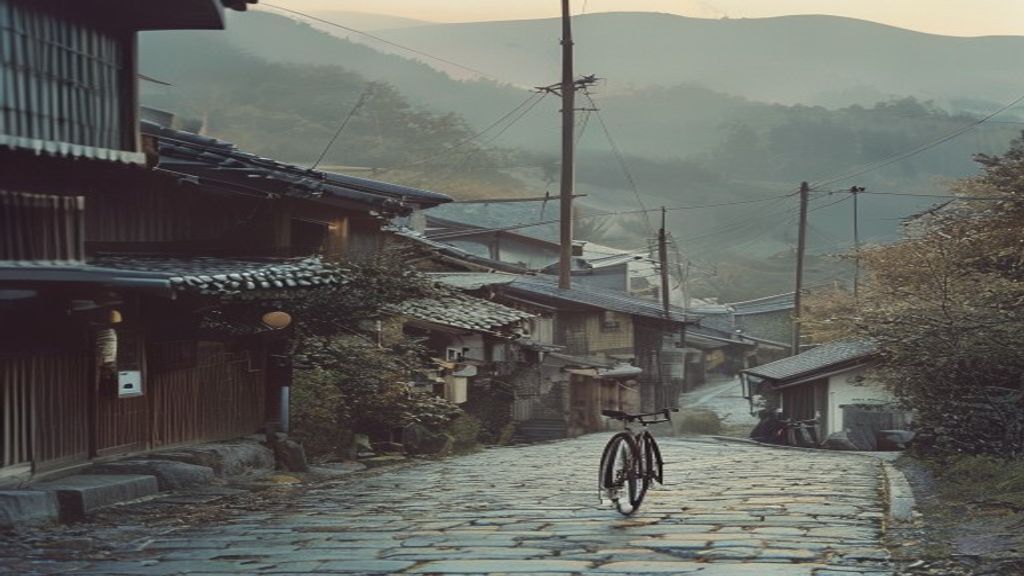
The defensive habit of forcing a turn didn’t stay inside the castle walls. Many castle towns, known as jōkamachi, were laid out with deliberately bent streets and offset intersections, sometimes called kagi-no-te, or key-shaped corners, for the same reason gates were angled: to slow any force moving toward the castle and break their line of sight. A street grid that looks inconvenient to a modern driver was often a defensive feature when it was first drawn.
Traces of this survive in some preserved castle towns, where a main road suddenly shifts a few meters to one side before continuing, with no obvious reason unless you know what the layout was protecting. It’s a reminder that Japan’s urban history often hides in plain sight within ordinary infrastructure, in much the same way canal-era crossings still shape street patterns in cities like Osaka long after the water itself disappeared (Osaka’s Hidden Suido Bridges: Tracing Canal-Era Crossings Buried Under Modern Streets).
What This Means for How You Walk a Castle Today
Knowing the logic behind the bends changes what’s worth noticing on site. Instead of walking briskly toward the keep, it’s worth pausing at each turn to look up: narrow openings in the walls, called sama, were positioned precisely to cover the ground you’re standing on, whether for arrows, guns, or dropped stones. The height and angle of the surrounding walls at these pinch points usually aren’t random either; they’re calculated to remove any blind spot a defender would otherwise have had to worry about.
It also reframes what counts as impressive about a surviving castle. The keep itself, often rebuilt or restored, tends to get the attention and the photographs. But the approach, the sequence of turns, gates, and small enclosed courtyards leading up to it, is frequently the part that survives closest to its original form and tells the more accurate story of how the castle was meant to be experienced by someone who wasn’t welcome there. This matters for a practical reason too: many keeps standing today are concrete reconstructions built in the twentieth century, while the surrounding gates, walls, and courtyards at the same site are often the genuine, centuries-old structure. If seeing original architecture rather than a replica matters to you, the approach is frequently where that authenticity actually lives, not at the top of the tower.
A Different Way to Read an Old Fortress
Most visitors arrive at a Japanese castle looking for the keep, the photograph, the view from the top floor. The real architecture, though, is often finished before you even reach the base of the tower, written into every turn you were made to take along the way. A castle that forces you to zigzag is still, in its own quiet way, telling you exactly how it expected to be approached by someone it didn’t trust.