Walking through Kyoto’s historic geisha districts, you may spot women in strikingly elaborate kimono. These are “maiko” and “geiko” — two distinct roles within Japan’s traditional performing arts culture. While they may look similar to the untrained eye, there are clear differences between them. This article breaks down what sets maiko and geiko apart.
What’s the Core Difference?
In simple terms, a maiko is an apprentice who is training to become a geiko. Maiko are typically young women in their mid-to-late teens through their early twenties, and this role is unique to Kyoto. A geiko, on the other hand, is a fully trained professional who has mastered dance, singing, and instruments like the shamisen. Geiko have no upper age limit and often continue their careers for decades.
Note that in other parts of Japan, such as Tokyo, the equivalent role is called “geisha,” which is essentially the same as Kyoto’s geiko. The maiko system, however, is a tradition specific to Kyoto.
Differences in Appearance
Maiko and geiko can often be told apart from a distance simply by their style.
Hairstyle
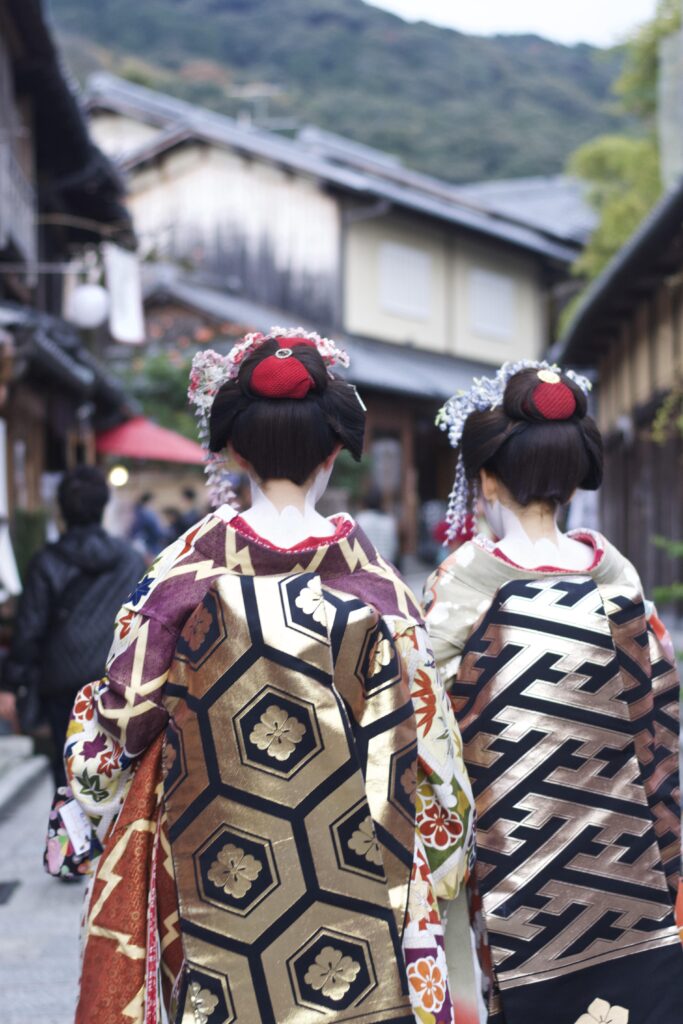
- Maiko: Wear their own natural hair styled into traditional Japanese hairstyles (such as wareshinobu or ofuku), elaborately decorated with hair ornaments called kanzashi and seasonal flower pins.
- Geiko: Wear wigs, with far more understated decoration, giving them a more mature, refined look.
Kimono and Obi
- Maiko: Wear long-sleeved furisode kimono in a trailing style called hikizuri, where the hem drags along the floor. Their obi (sash) is a long, dangling style called darari no obi.
- Geiko: Wear kimono with shorter sleeves, closer to a tomesode style. Their obi is shorter and tied in simpler styles, such as the taiko knot.
Makeup and Collar
- Maiko: Wear white face makeup, with junior maiko coloring only their lower lip red. Their collar (worn under the kimono) is typically a vivid red, adding to their youthful, showy appearance.
- Geiko: Wear more subdued makeup and typically a white collar, contributing to a more elegant, sophisticated look.
Footwear
- Maiko wear tall, elevated wooden clogs called okobo, while geiko wear lower, simpler sandals known as geiko zori.
Differences in Skill and Role
As apprentices, maiko are still in training. They practice dance, singing, and the shamisen daily, and during banquets (ozashiki) they typically support senior geiko by pouring drinks and helping to entertain guests.
Geiko, by contrast, are seasoned professionals who have already mastered their art. They perform classical dance, instrumental music, and singing at a professional level and often take the lead role in entertaining guests. Geiko themselves are sometimes further divided into tachikata (dance specialists) and jikata (music and vocal specialists).
The Transition Ceremony: Erikae
The moment a maiko graduates to become a full geiko is marked by a special ceremony called erikae, literally meaning “collar change.” The name comes from the shift in collar color — from red to white — symbolizing the maiko’s transition into a fully professional geiko.
Summary Table
| Aspect | Maiko | Geiko |
|---|---|---|
| Status | Apprentice training to become geiko | Fully trained professional |
| Age | Typically mid-teens to early 20s | No age limit |
| Hair | Natural hair, styled traditionally | Wig |
| Kimono | Furisode, trailing (hikizuri) style | Shorter, tomesode-style |
| Obi | Long, dangling (darari) | Shorter (e.g., taiko knot) |
| Collar | Red, decorative | White |
| Footwear | Okobo (tall wooden clogs) | Geiko zori (low sandals) |
Both maiko and geiko play essential roles in preserving Kyoto’s rich cultural heritage. Understanding the distinctions between them — in dress, makeup, and skill — adds a deeper layer of appreciation to any encounter with these iconic performers in Kyoto’s flower districts.