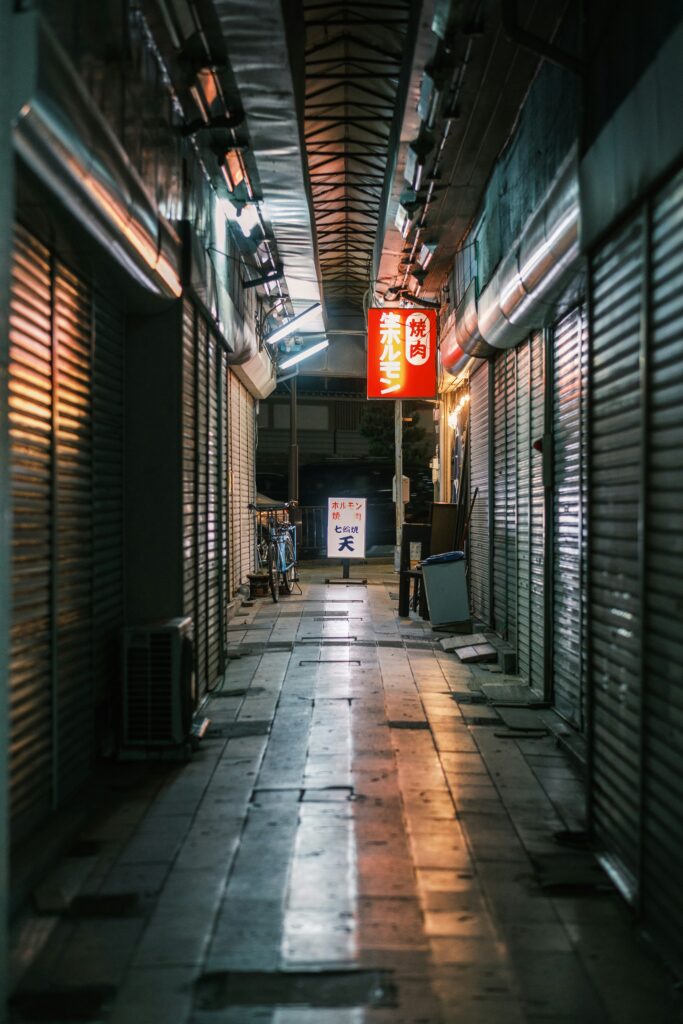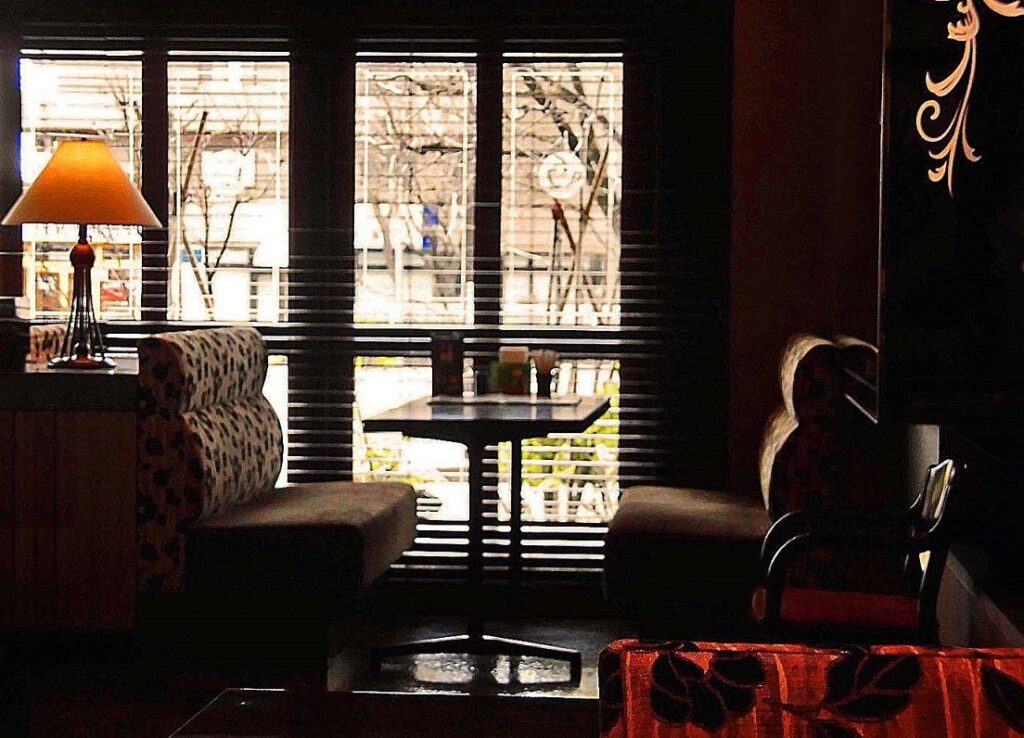
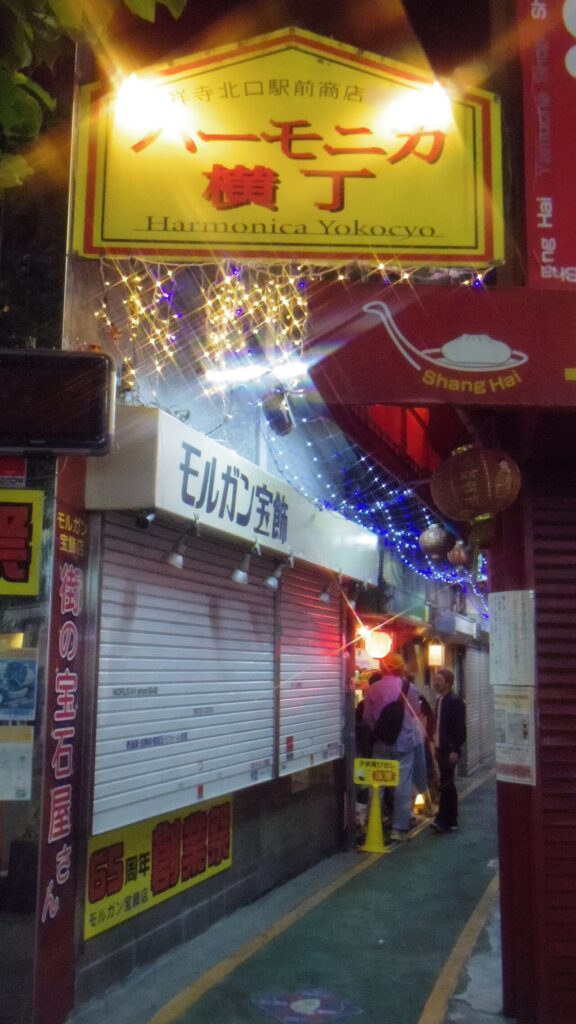
There’s a particular kind of afternoon light that filters through the translucent roof panels of an old Japanese shotengai. It falls soft and diffused onto the tiled floor, catching the dust motes drifting above a fishmonger’s display case, illuminating hand-painted sale signs in the window of a tofu shop that’s been run by the same family since 1962. The air smells faintly of grilled soy sauce and floor wax. An elderly woman pushes a wire cart past a hardware store. A cat sits motionless outside a sembei rice cracker shop, apparently employed as decoration.
You won’t find this shotengai in any guidebook. That’s almost the point.
Japan has roughly 12,000 shotengai — covered or semi-covered shopping arcades that line the commercial hearts of neighborhoods across the country. A handful of them, like Osaka’s Tenjinbashisuji or Kyoto’s Nishiki Market, have become tourist attractions in their own right. But the vast majority remain exactly what they were always meant to be: places where ordinary people buy their vegetables, get their shoes resoled, and stop for a coffee on the way home from the post office.
These are the shotengai worth finding.
What a Shotengai Actually Is (And Why It Matters)
The word itself comes from shoten, meaning shop, and gai, meaning street or district. Shotengai developed rapidly in Japan’s postwar economic recovery period, when neighborhoods needed practical commercial infrastructure and urban planners wanted to create centralized shopping zones that residents could access on foot or by bicycle.
The covered arcade design wasn’t purely aesthetic. It solved a real problem. Japan’s weather — the heavy summer humidity, the typhoon rains, the bitter January wind — makes open-air shopping genuinely unpleasant for much of the year. A roof meant that a housewife could do her daily shopping in the rain without an umbrella. It meant elderly residents didn’t have to navigate slippery streets in winter. The shotengai was, at its core, a piece of social infrastructure.
At their peak in the 1970s and 1980s, shotengai were the commercial and social anchors of Japanese neighborhood life. The butcher knew your name. The pharmacist knew your medical history. The owner of the stationery shop knew which school your children attended. Shopping wasn’t a transaction. It was a form of community maintenance.
The Long Decline — and What Survived It
The arrival of large-format retail in Japan changed everything. When supermarkets and shopping centers began spreading through suburban areas in the 1990s, and when convenience store chains started appearing on every corner, the logic of the shotengai began to erode. Why visit six separate small shops when one air-conditioned superstore could supply everything?
Many shotengai didn’t survive the answer to that question. Walk through any mid-sized Japanese city today and you’ll find at least one covered arcade that’s half-empty — its shuttered storefronts painted with cheerful murals to disguise the vacancy, its remaining businesses clustered at one end like survivors on a sinking ship. The Japanese term for this phenomenon is shātā-gai, a darkly humorous portmanteau of “shutter” and “shotengai.”
But here’s what’s interesting: the ones that survived did so because they found something a supermarket could never replicate. Personality. Specificity. The feeling that this place exists for these people, in this neighborhood, and nowhere else.
In some cases, survival came through specialization. There are shotengai in Osaka that became informal centers for professional kitchen equipment, drawing chefs from across the Kansai region. In Tokyo’s older shitamachi districts, some arcades preserved their prewar character so completely that they attract visitors who come not to shop but simply to feel the texture of an older city.
How to Find the Good Ones
The shotengai worth visiting aren’t necessarily the famous ones. They’re the ones where the ratio of locals to tourists sits firmly, unmistakably in favor of locals.
A few practical observations from spending time in these places:
- Look for shotengai near older residential neighborhoods rather than near train stations that appear in guidebooks. The best ones are usually a ten or fifteen-minute walk from anywhere a tourist would logically be.
- Arrive on a weekday morning. This is when the shotengai functions as it was designed to function — as a working part of daily life rather than a backdrop for photographs.
- Pay attention to the food shops. A shotengai with an active fishmonger, a working tofu maker, and a butcher who actually cuts meat to order is a shotengai that still serves its community. These are signs of genuine health.
- Notice the handmade signs. Mass-printed signage suggests a shotengai that’s been partially commercialized. Hand-lettered signs, slightly crooked price tags, and cardboard notices taped to glass are the marks of an owner who made them personally.
Specific Shotengai Worth Seeking Out
In Osaka, the Tengachaya area south of Namba contains several interconnected covered arcades that see almost no international visitors. The neighborhood has a rough-edged working-class character that feels genuinely distinct from the polished tourist zones nearby. Shops here sell practical things: work boots, household tools, cheap lunches for construction workers, lottery tickets.
In Tokyo, the Togoshi Ginza shotengai in Shinagawa is frequently cited as the longest covered shopping street in Japan, stretching nearly 1.3 kilometers. It’s more visited than most, but it retains a local character because it serves a genuinely dense residential population. Come hungry — the street food sold from small stalls along its length is worth the trip alone.
In Kyoto, away from the famous central markets, the Nishioji Shotengai near Uzumasa offers a glimpse of how Kyoto residents actually shop, rather than how tourists imagine they do. It’s quieter, less curated, and considerably more honest.
For something more atmospheric, the covered arcades of Kitakyushu in Fukuoka Prefecture — particularly around the Kokura area — have a faded grandeur that feels cinematic without being staged. These streets saw their peak decades ago, and they carry that history lightly, without self-pity.
Understanding these neighborhood commercial spaces connects to a broader pattern of how Japanese communities organize and communicate. The Quiet Ritual of Japan’s Neighborhood Notice Boards (and What They Actually Tell You) explores another layer of this same social fabric — the small, easy-to-miss structures that reveal how Japanese neighborhoods actually function as communities rather than simply as places to live.
The Etiquette of Browsing
Walking through a working shotengai as a foreign visitor carries some responsibility. These aren’t museums. The shopkeepers aren’t performers. A few things worth keeping in mind:
Entering a small shop creates a social expectation. If you walk into a tiny sembei shop and spend ten minutes examining everything, the owner will assume you’re considering a purchase. That’s not a problem — buying something small is a perfectly good way to acknowledge that someone’s livelihood depends on the space you’re occupying. It also tends to produce unexpectedly good conversations.
Photography requires judgment. Taking pictures of storefronts from the arcade walkway is generally fine. Pointing a camera directly at shop owners or elderly customers without any acknowledgment is not. If someone seems pleased that you’re interested in their shop, a brief bow and a smile before raising your camera usually resolves any ambiguity.
Loud conversation in English stands out more than visitors tend to realize. Not because it’s unwelcome, but because the ambient sound level of a functioning shotengai is naturally low — the murmur of transactions, the scrape of a cart, a radio playing somewhere. Match the energy of the space.
What These Streets Actually Reveal About Japan
The shotengai, at its best, represents a particular Japanese approach to public space: the idea that commerce and community are not separate activities but expressions of the same relationship. The fishmonger who’s been selling at the same stall for forty years isn’t just running a business. He’s performing a kind of social service — providing a reason for his neighbors to leave their apartments, to interact with someone who knows them, to feel that their neighborhood has a center.
This is why the decline of shotengai is mourned in Japan in a way that goes beyond simple nostalgia for old shops. What’s lost when a shotengai closes isn’t just retail space. It’s a particular kind of social infrastructure — one that can’t be replaced by a supermarket app or a delivery service, because its value was never really about efficiency.
There’s a parallel here to the kinds of places explored in Yamagata’s Mogami River Towns: The Slow-Moving Japan That Tourism Forgot — communities where the pace of life reflects a different set of priorities, where the question isn’t how to optimize but how to preserve something that works.
The shotengai that survive do so because enough people still believe that knowing your fishmonger’s name is worth something. That a slightly inconvenient, slightly imperfect, entirely human shopping experience is worth more than a frictionless transaction with a brand that doesn’t know you exist.
On a Tuesday morning in a covered arcade somewhere in Osaka, a woman in her eighties stops at a small vegetable stall, examines a daikon with the focused attention of someone who has been buying daikon for sixty years, and exchanges three sentences with the vendor. Money changes hands. She moves on. The vendor turns to arrange his display. The cat outside the sembei shop has not moved.
Nothing about this is remarkable. That’s exactly why it matters.
For a quieter counterpoint to the arcades that still thrive, read The Shotengai Nobody Visits Anymore.