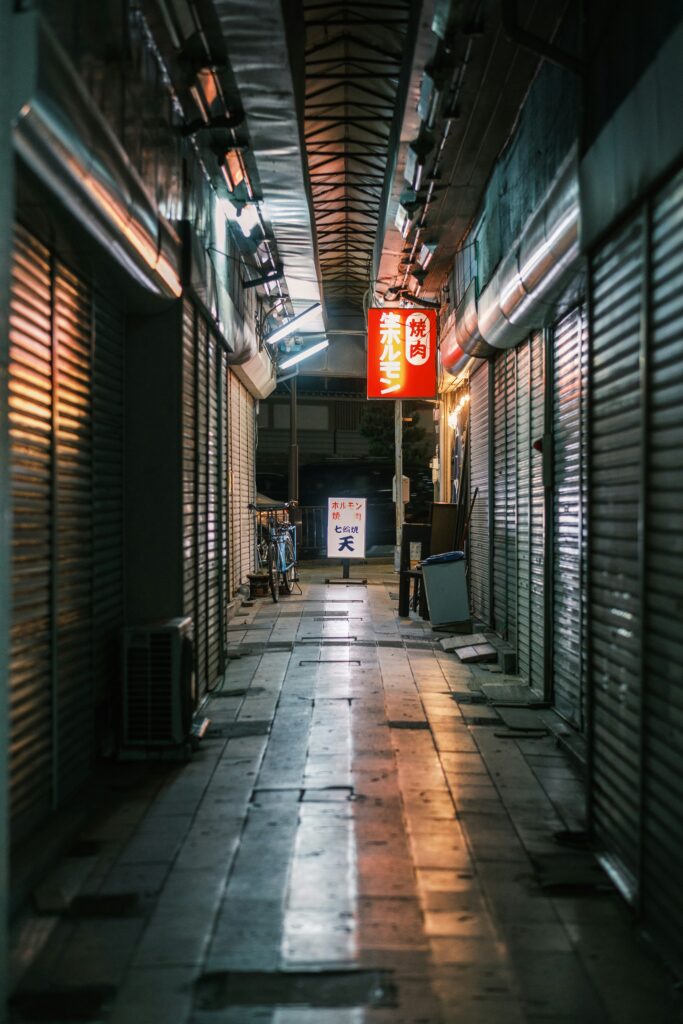
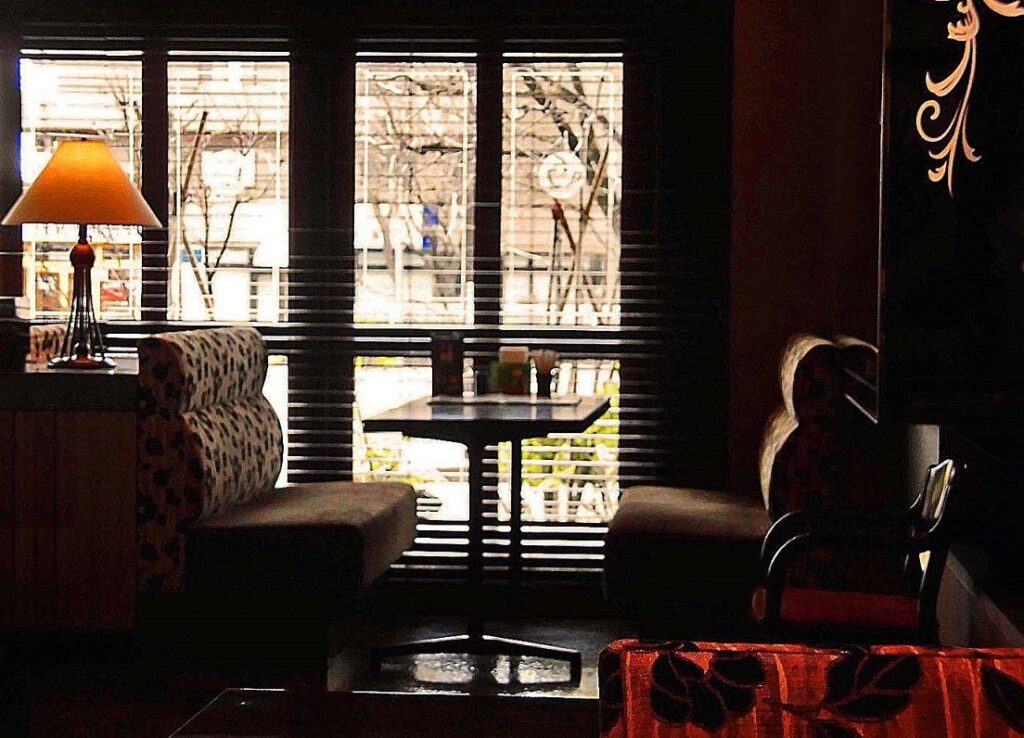
The clock on the wall stopped sometime in the mid-1970s. The jazz — real jazz, on vinyl — plays at a volume just low enough that you have to lean in to hear it. The master behind the counter has been making the same blend for thirty years, and he has no intention of changing it. You ordered a coffee ten minutes ago and it hasn’t arrived yet, because it’s being made properly.
That’s kissaten (喫茶店) — Japan’s old-school independent coffee shops — and almost nothing you’ve read about Japan will have prepared you for how good they are.
The word literally means “tea-drinking shop,” which tells you something about how long ago these places were named. Today the experience is almost entirely about coffee: slow, serious, and served without apology in a room that smells of wood polish and old paper.
Frozen in Amber
A kissaten is not a café. It is not a third-wave coffee bar with exposed concrete and a QR code menu. It is, typically, a single room run by a single person who opened it decades ago and has been refining it ever since.
The décor is personal to the point of autobiography. One master collects antique clocks. Another has covered every surface with jazz album covers. A third has arranged a small army of ceramic figurines along the window ledge for reasons nobody has ever asked about. Whatever the theme — and there is always a theme, even if it was never consciously chosen — every object in a kissaten has been there long enough to belong.
The menu is short by design. Coffee, sometimes tea, occasionally a “morning set” (mōningu setto, モーニングセット): toast, a boiled egg, and a small salad, offered free with your first coffee until around 11am. That’s it. Complexity would be a distraction.
The Art of the Extraction
Most kissaten masters have one method and one method only. It might be hand-drip (hando dorip, ハンドドリップ) over a cloth Nel filter. It might be a siphon (saifon, サイフォン), which looks like a chemistry experiment and produces something startlingly clean. Whatever the tool, the approach is the same: no shortcuts, no automation, no concessions to efficiency.
“You are not waiting for your coffee. You are watching it being made — which is a different thing entirely.”
The beans are usually a dark, full-bodied blend, often roasted in-house or sourced from a small local roaster. Kissaten coffee is not delicate or floral in the third-wave style. It is thick, slightly bitter, and served in a heavy ceramic cup on a saucer with a small piece of hard candy on the side. The candy is always there. Nobody knows exactly why, but it would feel wrong without it.
A Short Glossary
| Japanese | Romanization | Meaning |
|---|---|---|
| 喫茶店 | Kissaten | Old-style coffee shop |
| モーニングセット | Mōningu setto | Free morning meal with coffee |
| ネルドリップ | Neru dorippu | Nel (cloth) drip brewing |
| サイフォン | Saifon | Siphon brewing method |
| マスター | Masutā | The owner/barista (always called this) |
The Numbers, and What They Mean
At their peak in the early 1980s, Japan had roughly 170,000 kissaten. Today there are fewer than 60,000, and the number falls every year. The reason is straightforward: the masters are old. Many are in their seventies and eighties. They opened their shops in a different Japan, before Starbucks arrived in 1996 and before the third-wave café redefined what “good coffee” was supposed to look like.
When a kissaten closes, it doesn’t become something else. The furniture gets cleared out, the records get sold or thrown away, and the room becomes a convenience store or an insurance office. The blend — which existed nowhere else in the world — disappears with it.
Prices have often not moved in a decade. A coffee at a surviving kissaten typically costs between ¥400 and ¥600. Some places charge ¥700 for something that takes fifteen minutes to make and represents a lifetime of practice. It is, by any measure, an extraordinary deal.
How to Find One
Kissaten don’t advertise. They don’t have Instagram accounts. The best ones have hand-lettered signs, slightly steamed windows, and a noren curtain that’s been hanging in the same spot since the bubble economy. You find them by walking slowly through older neighborhoods — Koenji, Sangenjaya, or Shimokitazawa in Tokyo; Fushimi or Nishiki in Kyoto — and looking for the kind of place that seems too small and too quiet to be commercially viable.
When you go in, the etiquette is simple. Sit where you’re gestured. Order coffee. Don’t open a laptop. Don’t take a phone call. You may stay as long as you like on a single order — this is expected, not merely tolerated. The master will not rush you. Rushing would be a philosophical contradiction.
The master is always called masutā (マスター), regardless of gender. You don’t need to know their name. They don’t need to know yours.
The Thing No Guidebook Says
The kissaten is one of the few places in Japan where you can be completely alone in public without it feeling strange — and also one of the few places where, if you go regularly, you will eventually stop being a stranger without anyone making a point of it.
Most travel writing about Japan fixates on the country’s famous social reserve, the difficulty of breaking through, the sense that outsiders are welcomed warmly but kept at a certain distance. This is not wrong. But the kissaten operates on a different timescale. Come back three or four times. Sit in the same seat. Order the same thing. The master will eventually start making your coffee before you’ve finished asking for it. No ceremony. No announcement. Just the quiet acknowledgment that you’ve been here before.
That is as close as Japan gets to saying welcome back without saying anything at all.
Otsukaresama.