The fastest way to solve this problem is to stop looking for an English menu and start looking for a teishoku shop: a set-lunch counter where the food is displayed as plastic samples in the window or scrawled on a handwritten board by the door. A visitor doesn’t need to read a single kanji to choose well here. Pointing and saying “kore” (this one) is enough, and the staff will bring a complete meal built around whatever was indicated. The absence of English isn’t a locked door. It’s usually a sign of a restaurant that cooks for its neighborhood rather than for visitors, which is often exactly the meal worth having.
Why the Lack of an English Menu Isn’t the Real Problem
Travelers tend to treat a Japanese-only menu as a barrier to cross. The more useful way to think about it is as information. A shokudo that hasn’t bothered translating its lunch board has almost certainly never needed to, because its customers are local office workers and shopkeepers on a fixed one-hour break, eating there several times a month. That’s a strong, quiet endorsement. The decision isn’t “can this menu be understood,” it’s “does this place clearly know what it’s built for,” and a lunch counter full of regulars answers that question before a single word is read.
These shops have a specific lineage. The modern teishoku counter grew out of Japan’s postwar years, when factories and offices multiplied faster than restaurants could keep up, and workers needed a cheap, fast, nutritionally balanced meal within a short break. The format that emerged, one plate, one soup, rice, and pickles, was designed for speed and consistency, not for persuasion or spectacle. That history is still visible in how these shops run today: no waiting for a table to be cleared of menus, no upselling, no particular interest in whether a customer is a tourist or a regular, because the whole model was never built around convincing anyone of anything.
What a Teishoku Set Actually Includes, and Why That Simplifies an Order
A teishoku is a fixed combination meal: one main dish, a bowl of rice, miso soup, and a small plate of pickles, all served together for a single price. Some shops rotate a single daily version, called higawari teishoku, which changes depending on what’s fresh that morning. Others offer a short list of three or four standing options, like grilled fish, fried pork cutlet, or a simmered dish, each a complete set on its own.
This matters for the decision because it removes the hardest part of ordering in a foreign language: assembling a meal from separate line items. There’s no choosing a starter, then a side, then a drink. It’s one thing, and that one thing already comes complete. A menu with twelve unreadable rows looks intimidating; a menu that’s actually four whole meals is not.
A few small customs come with the format, and knowing them in advance removes any hesitation at the table. Rice refills, called okawari, are sometimes offered for free at shokudo that serve rice from a large pot rather than a pre-portioned bowl; a server gesturing toward an empty bowl is usually asking if more is wanted, not making an upsell. Miso soup is drunk straight from the bowl rather than eaten with a spoon. Tipping isn’t expected and can cause confusion if left on the table.
Reading a Shokudo’s Window Display Before Walking In
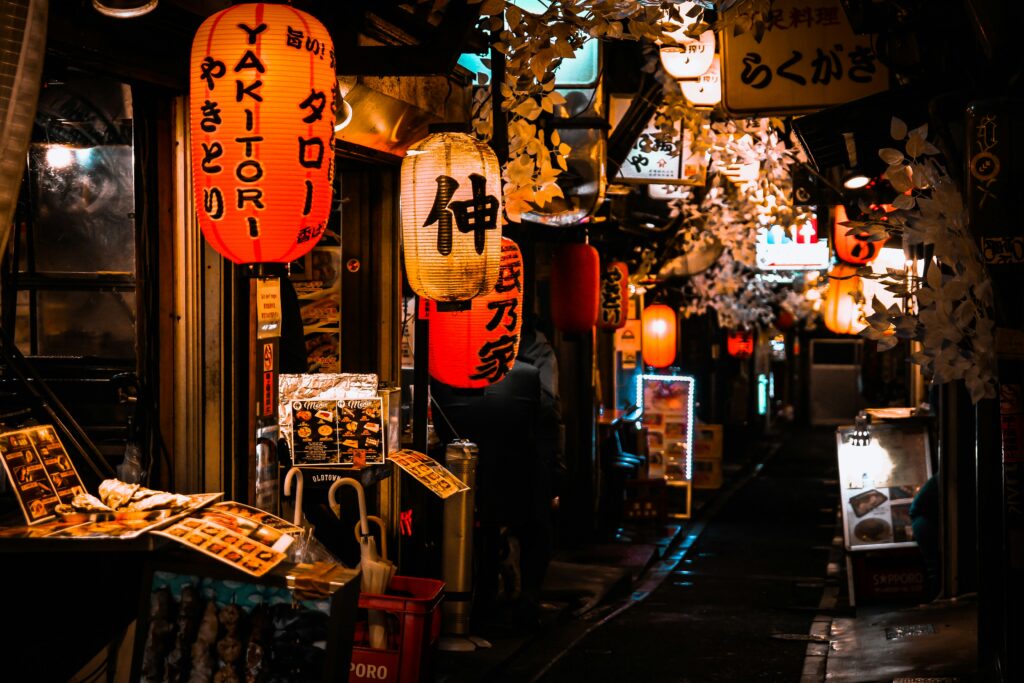
Most of the information needed is visible from the sidewalk. Plastic food samples, called shokuhin sanpuru, show the exact plate a customer will receive, often with the price printed beneath. A board listing two or three items at nearly the same price point usually signals a straightforward, no-frills set-lunch shop. A wider spread of prices, or dishes described with more elaborate names, often points to a restaurant angled more toward dinner service or a different kind of dining pace.
A single handwritten item taped near the door, sometimes with no photo at all, is frequently the day’s special: smaller batch, built around what the kitchen bought that morning, and often the best value on offer even though it’s the hardest one to identify without help. Price alone is a reasonable proxy for what kind of place it is. A teishoku priced noticeably below the others nearby isn’t necessarily worse; it may simply be a shop that’s been serving the same office crowd for decades and has little reason to raise prices faster than its regulars’ budgets allow.
How to Order When Neither Party Speaks the Other’s Language
Ordering at a teishoku counter is less a language exercise than a pointing exercise, and the systems in place are designed around that.
Ticket-Machine Restaurants
Many casual chains and some independent shokudo use a vending-style ticket machine near the entrance. Cash goes in, a button is pressed, usually illustrated with a photo, and the machine prints a ticket that’s handed to staff once seated. There’s no spoken exchange required at all, which makes these shops a reliable first stop if ordering anxiety is the main obstacle. Payment happens up front, at the machine, rather than at the end of the meal, which is worth knowing so no one lingers at the table looking for a check.
Table-Service Shokudo
In shops without a machine, staff will usually come to the table or counter. Pointing at the item on the outdoor sample case or an indoor photo board, combined with “kore, onegaishimasu” (this, please), is understood everywhere. Holding up fingers communicates quantity if ordering for more than one person. Payment in these shops is typically made at a small register near the door when leaving, not at the table, so it helps to watch what other departing customers do. If a translation app is part of the backup plan, it’s worth confirming connectivity is sorted before it’s needed mid-order; see Should You Rent a Pocket Wi-Fi or Buy a SIM Card for Japan Travel? if that’s still unresolved.
The Clues That Signal a Genuinely Good Lunch Counter
Beyond basic legibility, a few details separate an adequate choice from a good one. A line of local office workers forming right at the start of the lunch hour is a stronger signal than any rating app, since it reflects people who have every other option nearby and keep choosing this one. A shop that sells out of its daily special and simply stops serving it, rather than quietly substituting something else, is usually cooking in small batches from fresh ingredients rather than from a large prepped stock. And a short menu, counterintuitively, is often a better sign than a long one: a shokudo doing four dishes well tends to outperform one doing twenty adequately.
One common mistake is arriving at the exact start of the lunch rush, typically around noon, when seating is tightest and staff have the least time to work around hesitation. Arriving slightly earlier or waiting until the line thins gives more room to look at the display case without feeling rushed, and often means catching the daily special before it runs out.
What the Absence of Translation Says About Who the Restaurant Is For
Set-lunch shokudo run on thin margins and fast turnover, built to feed a one-hour workday break efficiently, not to accommodate browsing or deliberation. Printing and maintaining an English menu costs time and money that doesn’t serve that core customer, so most shops simply never do it. This isn’t a judgment on visitors; it’s a reflection of who the business was designed around from the start. Understanding that reframes the whole decision. It isn’t about finding a restaurant willing to make an exception for outsiders. It’s stepping, briefly, into a system built for someone else’s ordinary Tuesday, and the lack of English is just evidence that the system hasn’t been altered for anyone else at all.
There’s a particular kind of confidence that comes from ordering a meal that can’t be read, by simply trusting what everyone else at the counter is already eating. It asks less of a visitor’s Japanese than almost any other dining situation in the country, and it rewards with the kind of lunch that was never built with a tourist in mind, which, in a city full of menus translated for exactly that purpose, can end up being the more honest meal of the day.