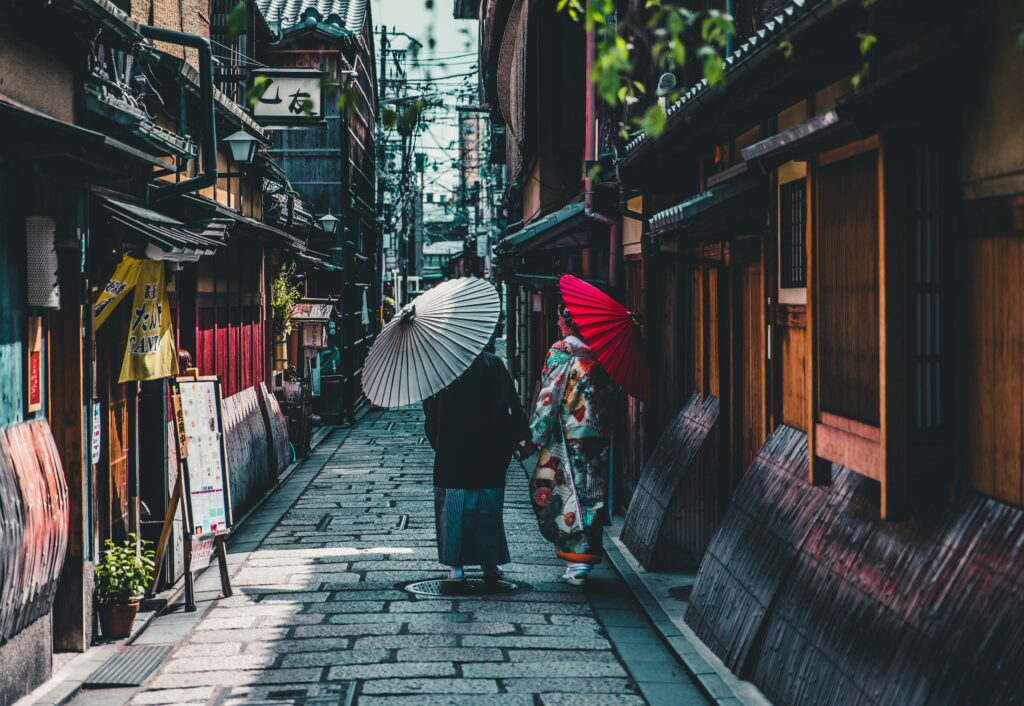

At first I thought it was a music box in someone’s window. A few bright notes drifted over the rooftops, then the melody—clear but slightly tinny—rolled across the neighborhood. Children on scooters glanced up. A man clipped his bonsai and didn’t break rhythm. Somewhere a kettle clicked off. The tune ended as suddenly as it began, leaving the street the way it had found it: quietly awake.
In cities and small towns across Japan, neighborhood loudspeakers announce the time each evening, often at five o’clock. Travelers misread them as quaint, odd, even eerie. They’re none of those. The chime is the audible edge of a deeper system, one that keeps track of time, childhood, and disaster—and binds strangers into the loose net of a neighborhood.
What You’re Hearing: The Everyday “Bōsai” Network
Those horn-shaped speakers perched on utility poles belong to each municipality’s disaster and community broadcast network, often called bōsai gyōsei musen. The system pushes out local notices: weather warnings, missing-person alerts, and tests. The daily tune that many visitors notice—the “five o’clock chime”—is a soft rehearsal. If the speakers work when it’s calm, they’ll work when it’s not.
The melody varies. In many places it’s “Yūyake Koyake,” a 1919 song about walking home at sunset as the temple bell rings. Some towns pick folk songs or municipal anthems; a fishing port I stayed in chose a brassy ship’s horn. The time shifts with the season, too—earlier in winter, later in summer—mirroring the arc of dusk and local school schedules.
Children hear the chime as a gentle curfew. Parents know it’s time to start dinner. And the mayor’s office knows its speakers are still alive.
Why a Chime Says So Much About Japan
Look closely at the pole under the speakers. There’s a small metal box, sometimes a laminated notice with a map of evacuation routes. You’ll see the same logic in other corners of daily life: order that isn’t rigid, safety that lives quietly in the background, rules that help strangers share space without friction.
That tone of collective care isn’t abstract. In many neighborhoods, small stone guardians—Jizō—stand watch at tricky corners and old road junctions, a folk geography of protection. If you’ve wondered about them, read more here: Japan’s Roadside Jizō: The Small Statues That Mark Old Fears.
The loudspeaker and the roadside Jizō do different jobs, but they spring from a shared habit: preparing for harm before it arrives, and reminding each other—gently—to take care.
When the Speakers Get Serious
If you stay during typhoon season, you may hear more than a melody. Announcements switch to a measured voice, often repeating: river levels rising, evacuation centers opening, a request to check on elderly neighbors. Farther north, I’ve heard them warn about bear sightings at the edge of town. In the rarest cases—missile tests, major quakes—the nationwide J-Alert system rides these speakers, joined by alarm tones on phones and TV tickers.
Disaster messages can be hard to catch if you don’t speak Japanese, and the audio scatters in the wind. That’s not a design flaw so much as a compromise: these speakers need to cover valleys, markets, schools, and side streets all at once. For travelers, there are simple workarounds. Set your phone language to English and enable emergency alerts; add the Japan Tourism Agency’s Safety Tips app for push notifications in English; and consider NHK World’s app for reliable updates.
How to Understand the 5 p.m. Chime Like a Local
It’s a timekeeper, not a curfew for you
You don’t need to go anywhere when you hear it. If you’re a runner or a photographer, it’s a lovely sign that the light is tipping into blue hour. School clubs wrap up about now. Bakeries put out their discounted evening breads. The park grows quieter as families drift home.
It’s a system check
Municipalities use the daily chime to confirm the PA network works. If you hear a different melody at noon, or once a week at 10 a.m., that’s likely a scheduled test. In a storm, the same pole that sings will tell you where to go.
It’s also a reminder to watch out for kids
Hard to see at first, but there’s choreography in those minutes after five. Crossing guards fold their flags. Convenience stores shift from school snacks to bento buyers. You’ll notice it once you’ve heard the chime a few times: the neighborhood’s pulse resets.
How to React If You Hear an Urgent Announcement
- Pause and listen. Urgent messages repeat. If you catch a word like “hinan” (evacuation), “kawa” (river), or “taifū” (typhoon), give it attention.
- Check your phone. Emergency alerts may arrive in English via the Safety Tips app or through your device’s alert system.
- Ask for help. Convenience-store staff and station attendants are used to pointing people toward shelters or explaining what’s being said.
- Know a nearby landmark. Schools and community centers often serve as evacuation sites. The notice board under the speakers sometimes lists them.
If you’re planning a flexible route through the country and wondering how much to lock in, these systems and seasons matter. A quiet chime in a mountain town might signal the last bus. For thoughts on balancing freedom and logistics, see: How Much of Japan Should You Book Before You Arrive?
A Short History of a Very Local Sound
Public address systems arrived in Japan in the early 20th century, but the modern network took shape after repeated floods and earthquakes. Municipalities built bōsai hubs and installed speakers with battery backups. The nightly chime, once a postwar habit to nudge kids home, survived because it served two masters at once: it kept time, and it kept the speakers limber.
That tune also sits beside an older soundscape. The “Yūyake Koyake” lyrics mention a temple bell that rings at dusk—an earlier kind of neighborhood clock. Even now, in small towns, you may hear both: a slow bronze note rolling over rice fields, then, a minute later, the light metallic melody of the PA.
Where to Notice Them Best
- Small coastal towns: Fishing ports often rely on the speakers for tide and weather warnings. The sound travels cleanly over water.
- Suburban neighborhoods: Follow a residential street around 4:50 p.m. and you’ll see the lanes subtly reorganize themselves in anticipation of the chime.
- Snow country: In winter, announcements include snow clearance times and route closures. The sound is softer under snowfall, almost padded.
- River districts: Near levees you’ll find evacuation maps posted under the poles; trace the routes with your finger and you’ll understand how the town breathes when water rises. For a deeper look at water shaping daily life, read: Shiga Beyond Lake Biwa: Following Water Through an Older Japan.
Etiquette Around the Everyday Announcement
There’s nothing formal to do when it rings. People keep walking. Cyclists coast. If you stop to listen, no one will mind. What matters is the shared assumption that the system is for everyone and belongs to no one; it works because it’s ordinary.
On rainy-season evenings, the tune can feel especially gentle, softened by water and traffic hiss. You’ll notice umbrellas parked neatly at shop doors—another small social agreement that keeps space shared and dry. If you’ve ever wondered how that works without chaos, this explains it well: Why Japanese Shops Leave Umbrellas Outside the Door.
Practical Tips for Travelers
- Best time to listen: Late afternoon. Get a coffee from a family-run kissaten and wander residential backstreets ten minutes before the hour. When the chime sounds, pay attention to what people do next.
- Photography: Don’t aim your lens at individual homes when you stop. Instead, look up: poles with clustered horn speakers, a small metal control box, the power lines that draw a net above the street. Capture how the light changes on them.
- Language prep: Learn a few words—“hinanjo” (evacuation shelter), “kekkai” (closure), “kōtsū” (traffic). They go a long way if a storm blows in.
- Time of year: In summer, the chime may come later; in winter, earlier. If you’re timing a train or bus connection, be aware that the nightly tune can mark the last rush of schoolkids boarding local lines.
- If you’re noise-sensitive: Book accommodation a few blocks off a main street or near a park. The chime lasts less than a minute, but announcements during typhoon days may repeat.
Why This Matters More Than It Seems
It’s tempting to treat the five o’clock melody as a quaint localism, the way you might collect a stamp in a temple book and move on. But the speakers say something larger about how communities here function. They make safety ambient. They socialize time. They let people live alongside each other without a thick rulebook—because the rule hums into the air once a day and then stops.
Watch a child hesitate at the curb and then cross after the chime, or an old man finish sweeping his genkan and straighten up as the last note fades. No one is obeying. They’re simply coordinating with a sound they all recognize.
If You Want to Go Deeper
Ask a local which song their town plays. There’s usually an answer, and often a story. Some municipalities change melodies for festivals. Others silence the chime during exam weeks to keep things quiet. If you’re in one place for a few days, step outside a minute before dusk each night and listen from different corners. The same song, two alleys over, changes its shape.
And when the speakers carry real news, you’ll already know their voice. You’ll have listened to the neighborhood listening to itself.
One evening in early spring, I stood by a row of plum trees as the tune floated out. A delivery van idled. A woman reached up to bring in her washing and paused, clothespin between her fingers, until the last notes fell. The ground held the day’s warmth; the air smelled faintly of soy and grilled fish. Then the sound was gone and everything resumed, as if it had only ever been a breath the town shared and returned.