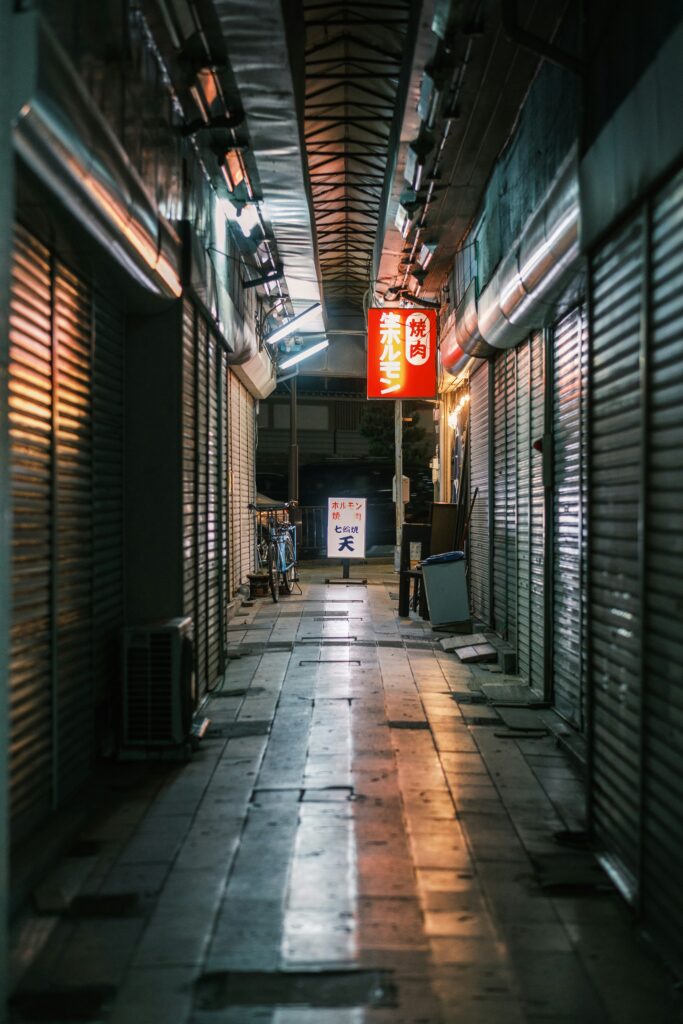
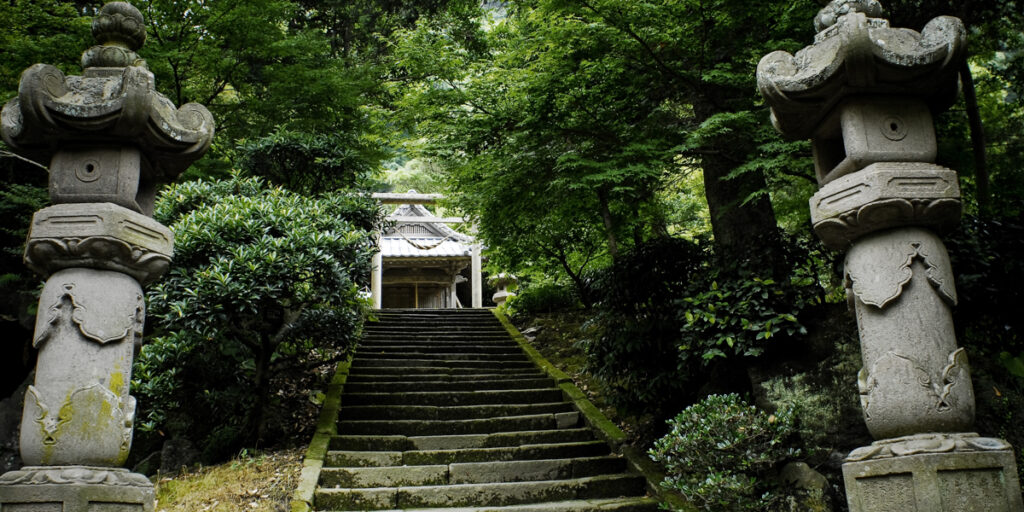
On a side street in Taitō, where laundry lines share space with power cables and a bicycle bell is the loudest thing you’ll hear, there’s a stone pillar hardly taller than a child. Its carvings are worn into a soft relief, but you can still make out the three monkeys—hands over eyes, ears, mouth—climbing its face like a riddle left by another century. A few marigolds wilt in a glass jar at the base. Scooters pass. No one looks. And yet this is one of Tokyo’s oldest conversations, still happening quietly on the curb.
The pillar is a Kōshin tower—kōshintō in Japanese—raised by neighbors more than 200 years ago. These stones once marked time, fear, and solidarity in the Edo period. Many survive in corners, alleys, and the edges of parking lots. If you know what to search for, you start seeing them everywhere.
What is a Kōshin tower?
Kōshin (庚申) is an old folk belief with roots in the Chinese sexagenary calendar and blended in Japan with Buddhist and Shintō ideas. Every 60 days, on the Kōshin night, people believed that three creatures inside the body—the sanshi, often called “three worms”—would slip out to report a person’s misdeeds to the heavens. To stop the report, communities gathered for an all-night vigil, eating, talking, sometimes praying, and decisively not sleeping.
Those vigils needed a focus. So neighborhoods put up stones. Many show Shōmen Kongō, a fierce, blue-faced guardian from esoteric Buddhism, flanked by the three monkeys who “see no evil, hear no evil, speak no evil.” The monkeys are more than a moral cartoon; in Kōshin faith, they’re linked to staying mindful so the worms have nothing to report.
Look closely and you’ll often find a date carved on the side in the old Edo way, a catalog of donors, or a line about warding off calamity. The language can be hard to decipher, but the impulse is clear: this was both a cosmology and a neighborhood watch.
These aren’t museum pieces. They were built to live outdoors—rain, traffic, and the occasional delivery truck mirror brushing past. When I stop to read one, a resident might straighten the flowers or sweep the base. It’s maintenance as devotion, more chore than ceremony, and it tells you as much as the carvings do.
If roadside faiths interest you, you’ll likely recognize a similar neighborly care around other small guardians. The modest figures people pass daily are abundant here, as in Japan’s Roadside Jizō: The Small Statues That Mark Old Fears.
Where to find Kōshin towers in Tokyo today
The easiest clue is in place names. On the Toden Arakawa Line, there’s a stop called Kōshin-zuka—literally “Kōshin mound.” Even if the original mound has shifted location, the name remains like a breadcrumb. Older districts that escaped heavy wartime fire often keep more stones: Taitō, Arakawa, Katsushika, parts of Setagaya and Ota. Around local shopping streets (shōtengai) or residential corners where traffic narrows, you’ll sometimes notice a low plinth with a small roof tile above it. That’s a hint.
Digital helps too. On Google Maps, type 庚申塔 (kōshintō) or 庚申塚 (kōshin-zuka). Pins pop up in clusters, often near temples but just as often at crossroads or by a row house gate. Street View can confirm if it’s accessible and how close you’ll be to someone’s front step. Some stones sit inside tiny roofed enclosures with a sliding lattice; others stand raw at the curb, their inscriptions slick with city grime.
The north side of the city is reliable for a first wander. Taitō’s old streets around Yanaka and Nezu still have that patchwork of wood shops, workshops, and family homes where a Kōshin tower doesn’t feel out of place. In Katsushika’s Shibamata, the alleys behind the Taishakuten temple teem with carvings beyond the famous ones. Setagaya hides them in the folds between major roads—pocket lanes where delivery vans can barely squeeze through.
How to spot one on the street
- Look for a low stone pillar (knee to waist height) with carved figures: three monkeys, a guardian figure, or Sanskrit-like seed syllables.
- Check the base for vases, a small coin tray, or a broom. Living shrines show signs of care.
- Scan nearby: many stand at the meeting of three or four paths—classic places to tame wayward spirits.
How to read a stone without reading kanji
You don’t need to crack Edo inscriptions to understand the intent. Shape and iconography tell a lot. Monkeys usually appear in a trio, stacked or side by side. If you see a stern, almost theatrical face with a crown and a weapon, that’s probably Shōmen Kongō, a protector borrowed from Buddhist mandalas to help with a very down-to-earth concern: keeping the body’s moral inventory sealed.
Dates may be written in the old era system (Genroku, Kyoho, Bunsei, etc.). A quick photo search at home can cross-check the era name against Western years if you’re curious. Names of donors often line the sides—carpenters’ guilds, fishmongers, neighborhood groups. It’s a roll call of Edo’s working city.
Resist the urge to touch. Oils from hands darken stone unevenly, and fragile edges chip. If there’s a cloth or bell, those are usually for residents. Feel free to bow lightly from the sidewalk if you want to mark the moment.
Planning a walk to find Kōshin towers
For a first outing, pick one neighborhood and map three or four stones to connect by foot. Expect a slow kilometer to take an hour when you’re ducking into alleys and pausing for details. Early morning offers side light that brings carvings alive without harsh glare; late afternoon has that amber wash that makes old granite look warm.
Getting there is easy on local lines: the JR Yamanote will take you to Nippori (for the Yanaka area) or Sugamo (to transfer to the Arakawa tram for Kōshin-zuka). In Setagaya, the Tokyu Setagaya Line is a nostalgic streetcar that puts you in the right kind of streets—low, residential, human-scaled.
Give yourself two to three hours. Bring water, a small umbrella, and cash for a bakery or kissaten you’ll inevitably find just when you want to sit and think. If you’re juggling reservations elsewhere, planning a looser day around these sorts of slow discoveries can help; some travelers find it easier to keep only key bookings and leave space for wandering, as I wrote in How Much of Japan Should You Book Before You Arrive?.
Etiquette on residential lanes
- Stand to the side if a resident needs to pass. Smile and nod; a simple “konnichiwa” is enough.
- Don’t step into yards or lean on gates. Many stones are inches from private thresholds.
- Keep voices low. Sound bounces in narrow lanes.
- No incense unless you live there. Offerings are for neighbors who tend the shrine.
Photography tips for worn stone
Stone blessings aren’t dramatic. That’s their charm. Move slowly around the pillar to find the angle where side light lifts the relief. A phone works fine, but try tapping to expose for the highlights on the carving—blown-out grey erases the very thing you came to see.
Step back for context. So much of the story is the ordinary life within arm’s reach: a pot of shiso, a hand-lettered sign for a closed barber, utility poles with decades of staples. If a resident is tending the stone, don’t shoot until you’ve asked. Sometimes the better picture is the one you don’t take.
Why these corners matter
Kōshin towers survive because they fit the grain of the city. They’re practical metaphysics—anxieties laid in stone, maintained by people whose days were long and physical and timed to markets and monsoons. The faith was syncretic not out of trendiness but need: if a Taoist calendar helped organize a Buddhist vigil that made a Shintō corner feel safe, then good. The city kept moving.
Today the vigils are rare, but the habit of care lingers. Someone still replaces flowers, sweeps leaves, straightens the wind-bent paper on a side altar. In a country where small acts of trust are common—umbrellas left outside doors, coins left in honesty boxes—these stones feel like part of the same social weather. If you’ve ever wondered why that soft trust works here, there’s background in Why Japanese Shops Leave Umbrellas Outside the Door.
When you stand at one of these corners, you’re sharing a vantage point with a fish seller from 1811 and an office worker from ten minutes ago. The street is the same. The worry—how to live decently under the eye of heaven, or simply under the eye of neighbors—hasn’t changed much either.
If you want to go deeper
Once you’ve seen a few Kōshin stones, other street shrines start speaking up: tiny Inari fox niches in loading docks, road-facing guardian Buddhas wearing bright bibs. Waterways and old boundaries often guided where these sprang up. If you’re drawn to how water shapes belief and settlement in Japan, I wrote about it more broadly in Shiga Beyond Lake Biwa: Following Water Through an Older Japan.
In local archives and small museums, you might find sketches of Kōshin-night gatherings with neighbors sitting under lanterns, snacks piled high, the tower looming like a quiet referee. Those drawings aren’t quaint; they’re proof that cities breathe better when people have reasons to stay up late together now and then.
A small loop to try
Start at the Arakawa Line’s Kōshin-zuka stop. Walk south toward Sugamo’s old shopping street, then peel off into the back lanes. Keep your map open to 庚申塔, but let your nose for side streets lead. In twenty minutes you’ll likely have seen one tower and passed three places you want to come back to. If you miss it, don’t worry. The city is generous with second chances, and so are these stones.
Seasonal notes
Spring tucks petals into every crevice, magnifying the carvings with accidental confetti. Summer dulls the surfaces with humidity but paints the air with cicadas; early hours are best. Autumn leaves make perfect frames on the ground; winter’s low sun is a spotlight for inscriptions. Rain, of course, is when stone looks its most alive. Bring a towel for your lens and accept that you’ll walk slower in exchange for better light.
What these stones reveal about Japan
There’s a line between public and private life here that’s both firm and porous. Kōshin towers sit exactly on it. They’re owned by no one and tended by many. They belong to the street, but the street is made of households. That’s why you see slippers by a doorway but the world’s offerings on the curb a foot away.
I like the quiet agency of that. No authority tells a retiree to sweep around the pillar, to tie a new string around a cracked vase, to pick up the one candy wrapper that violates the mood. Yet it happens. And then another passerby notices that it happens. A city thickens around small examples. You don’t need to understand the Kōshin calendar to feel it.
One evening, I watched a man stand before a tower with his grocery bag still on his wrist. He didn’t bow. He just stood, counted three breaths, and walked on. The light caught the carved monkeys on its way down. Traffic shifted a little. The corner, as ever, held its ground.